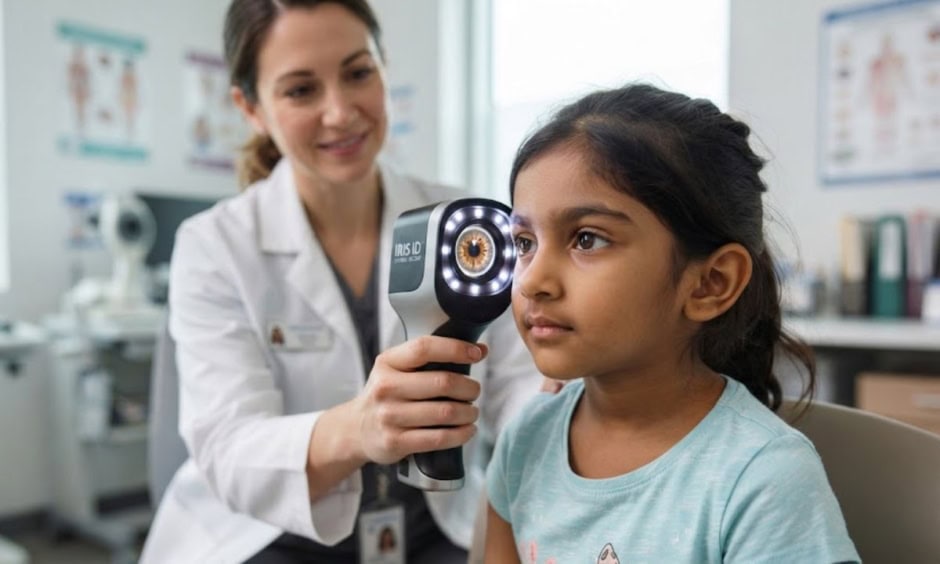
The National Database and Registration Authority (NADRA) has made iris-based biometric identification available at more than 5,000 counters across Pakistan, with a focus on registering children under 18.
The ongoing drive strengthens the identification of minors through photographs and biometric features. NADRA said iris scans will protect children from identity theft and misuse. The method will also serve as an alternative for elderly people, manual workers and others whose fingerprints cannot be captured due to illness or skin conditions.
Speaking to the media, NADRA Director of Media Shabahat Ali said the rules governing the national identity card system were framed in 2002, when the country’s political, geographical and economic circumstances were very different. He said the security environment has also changed considerably since then, including developments linked to the Afghan war and regional instability.
According to Ali, registration continued under the same rules for nearly 23 years, during which several shortcomings emerged. NADRA raised these with the Ministry of Interior and sought guidance. The matter was then referred to the prime minister, after which major reforms were introduced.
A key part of the reforms is the protection of citizens below 18, who make up around 46 percent of the population. Ali said the absence of a photograph in identification records could leave children vulnerable to identity theft or misuse.
The reforms have also broadened the definition of biometric identification. Verification was earlier understood mostly in terms of fingerprints, but facial features and the iris are now also recognised as important identification markers.
NADRA has informed financial institutions that where fingerprints cannot be obtained due to age, illness or any other reason, a person can be verified through facial recognition. The authority said the iris is a unique biometric marker and offers a highly effective method of identifying an individual.