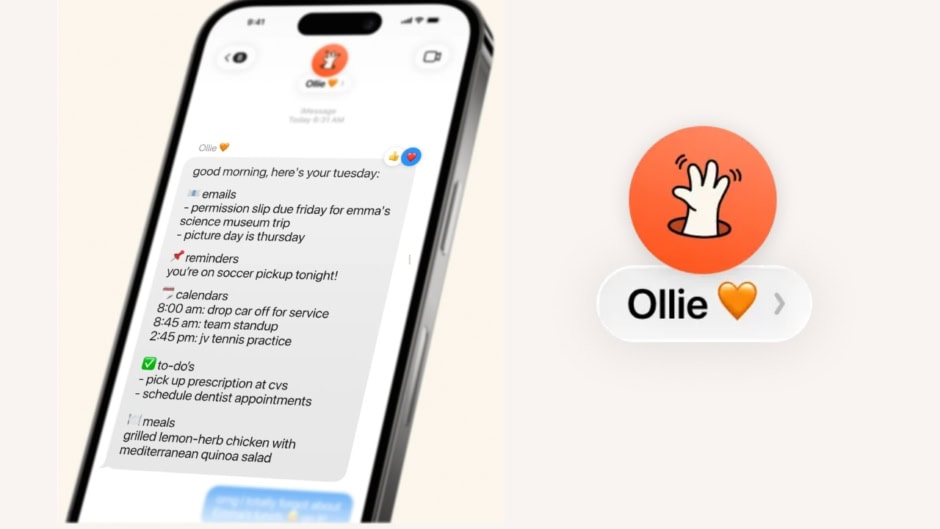
An AI assistant must learn a lot about you to become truly useful. However, Ollie believes that does not require sacrificing your privacy. The family-focused personal assistant is betting that strong data protections can help it stand out in an increasingly crowded market.
Ollie recently became one of the first mainstream, family-focused AI assistants to achieve SOC 2 compliance. This framework lets a company prove, through an independent audit, that it has formal controls protecting customer data. For Ollie’s team, the milestone signals something important. It tells users the assistant is not scooping up personal data for other purposes, such as AI training.
Co-founder and CEO Bill Lennon explained the reasoning directly. He said trust and privacy are absolutely imperative to the company. That belief shapes Ollie’s business model, which relies on subscriptions rather than data. Lennon stressed that Ollie works for its users, not advertisers. He added plainly that the company shares user data with no one.
Ollie’s founding team brings notable experience to the effort. Based in San Diego, the company was founded in 2023 by Lennon alongside co-founders Max Fergus and Christine Shannon. Lennon holds an AI PhD from UC San Diego. He previously served as CEO of fintech startup Groundwork, which was acquired in 2021. That fintech background could help as Ollie eventually moves into household budget management.
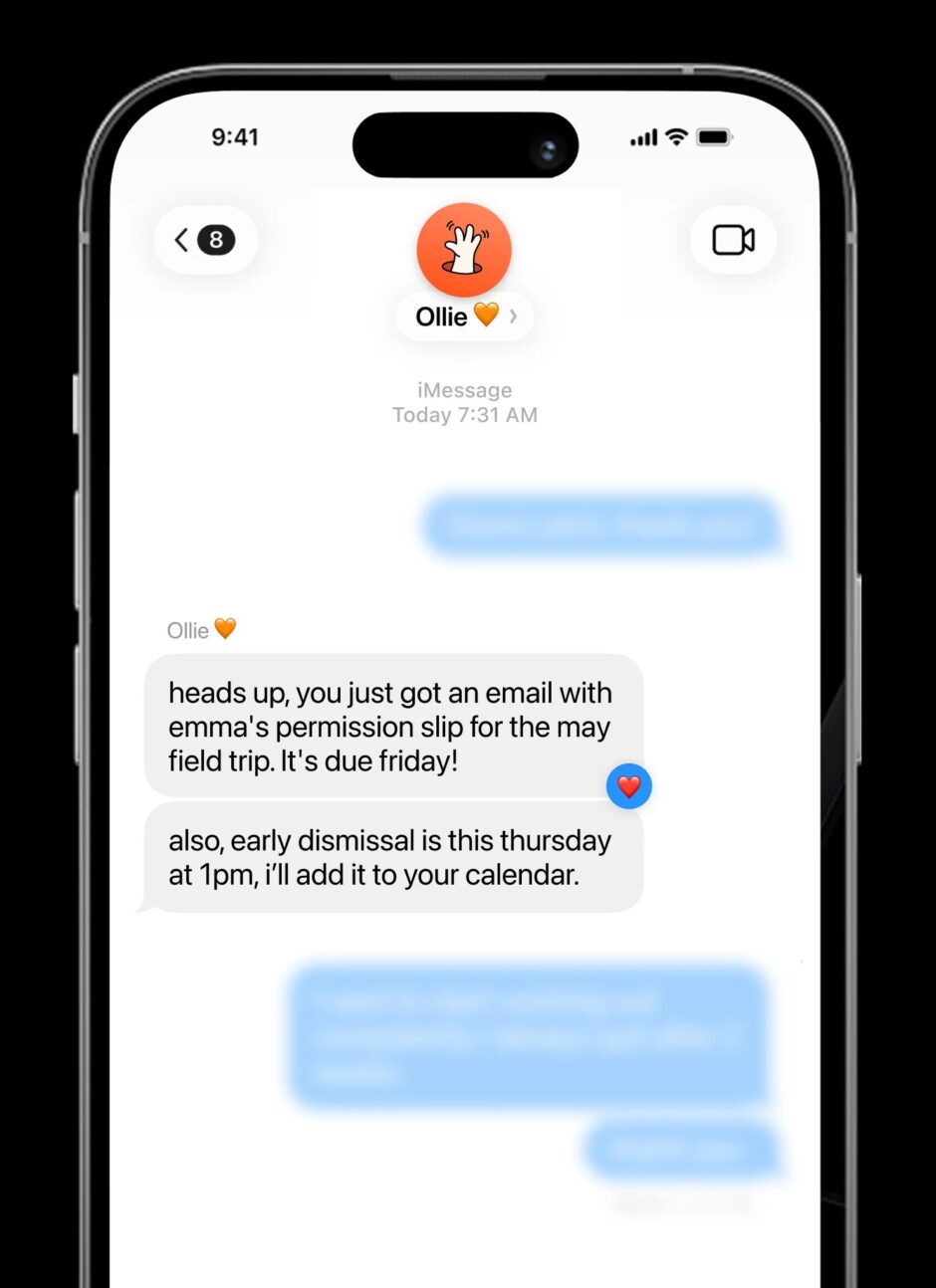
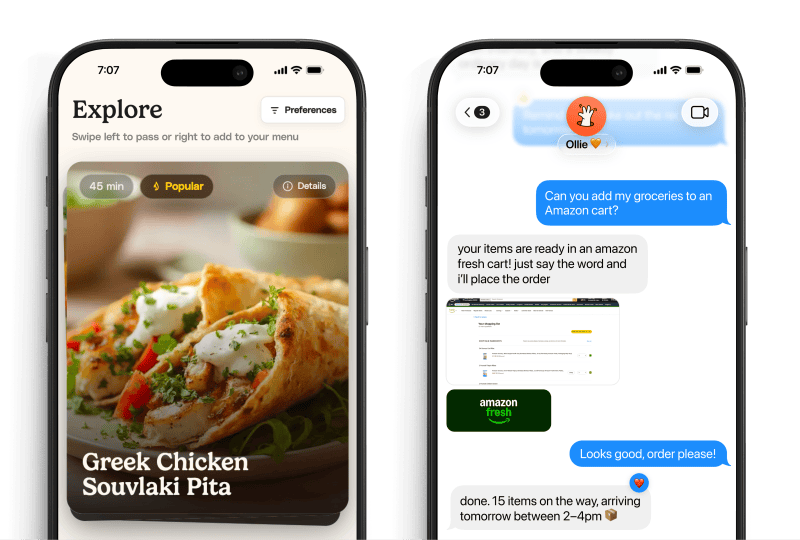
The company officially launched its text-based assistant on June 2, 2026. It connects to Google and Apple calendars while scanning Gmail and Outlook for school emails. From there, it manages reminders, daily briefings, and meal and grocery planning. Users interact with it directly through group chats.
The privacy angle could prove a meaningful differentiator in a heated market. Ollie competes with rivals including Poke, Fambot, Ohai, Folk, and Tomo. It also faces Instinct, which recently raised $350 million at a $2.5 billion valuation before even launching. By comparison, Ollie raised a modest $7.5 million seed round from Khosla Ventures and AI House.
Privacy concerns have already tripped up competitors. Instinct faced criticism over broad terms granting it a perpetual license to use customer materials, including for AI training. Lennon is taking a deliberately different path. Notably, Ollie never requests usernames or passwords. When it needs to log into a website, it uses its own cloud browser instead, then sends the user a remote session link.
While this method adds security, it means users must still log in for certain tasks. Lennon believes technology will eventually smooth that friction through secure tokenization. However, he acknowledged the broader challenge honestly. He admitted that large language models remain inherently unreliable due to their probabilistic nature. As a result, his team builds defensive safeguards to catch and prevent errors before they reach users.
You can see Ollie for yourself here.