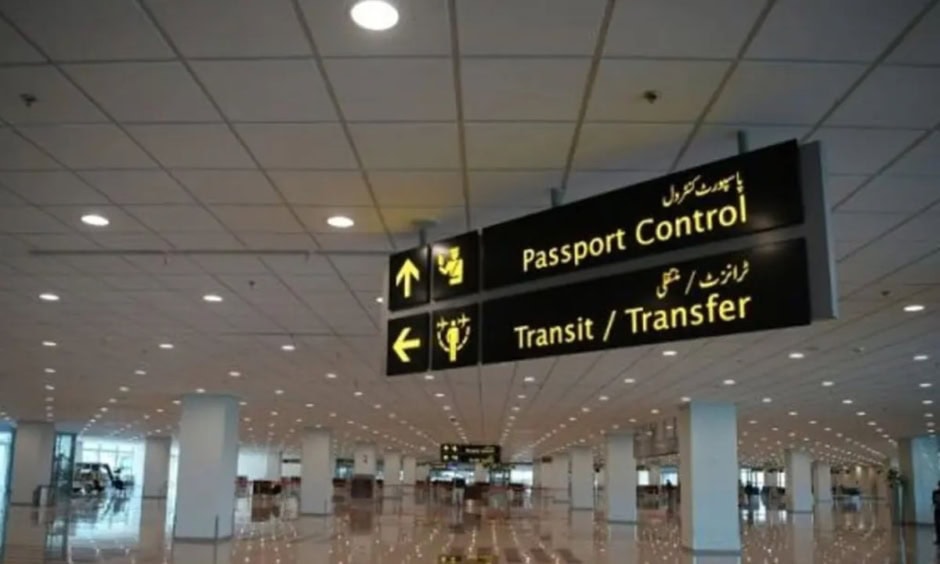
Pakistan Airports Authority (PAA) has shifted its Automated Border Control E-Gate project from open international competition to a single-entity procurement under Rule 42(f) of the PPRA Rules, 2004, prompting sharp objections from oversight bodies.
In 2020, the then Civil Aviation Authority, now known as PAA, issued an international request for proposal covering E-Gates, biometric verification and passport authentication systems, and a technical evaluation was subsequently completed.
However, no contract was awarded following that evaluation, and in 2024 PAA launched a fresh Expression of Interest process that ultimately shortlisted three separate firms for further consideration and review.
A German engineering consultant was then appointed to prepare the technical specifications, yet the final request for proposal was issued exclusively to AXI Systems Private Limited, a state owned enterprise, bypassing the shortlisted firms.
Transparency International Pakistan subsequently questioned the applicability of Rule 42(f), procurement transparency, price reasonableness and beneficial ownership, while the Public Procurement Regulatory Authority separately sought detailed procurement records from the authority.
PPRA formally wrote to PAA on 11 May, 21 May and 03 June 2026, requesting complete procurement details and supporting documentation, but the authority did not furnish any of the records.
In its response dated 03 July 2026, the Ministry of Defence stated that the project was being undertaken through indigenous resources because of data and national security considerations, and that no contract has been awarded.
The ministry further clarified that the Rs 20 billion figure earlier cited by Transparency International Pakistan does not reflect the current status and actual financial particulars of the ongoing project.
TIP argues that Rule 42(f) of the PPRA Rules was misapplied in this case, noting that AXI Systems reportedly lacks the in-house technology, expertise and capacity needed to independently deliver the E-Gate system.
Under this specific rule, state owned enterprises may only be awarded such contracts if they execute projects entirely through their own resources, without involving private partners, joint ventures or subcontractors, TIP noted.
TIP further stated that PPRA rules require limited competition among all eligible state owned enterprises through transparent procedures, along with proper price reasonableness checks that were reportedly never conducted in this particular case.
The Ministry of Defence separately told the Prime Minister Office that matters relating to price reasonableness, disclosure, beneficial ownership and performance security would be addressed at a later contractual stage.