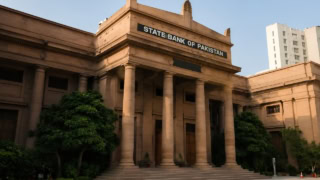
Pakistan is on track to meet six of seven quantitative performance criteria (QPCs) under its ongoing IMF program ahead of the lender’s expected September 2026 review, according to a report by Arif Habib Limited (AHL).
The IMF team is expected to visit Pakistan in September for the fourth review of the Extended Fund Facility (EFF) and the third review of the Resilience and Sustainability Facility (RSF).
Six IMF Targets Likely Met
AHL said six of the seven key performance criteria appear likely to have been met at the end-March and end-June 2026 test dates.
The seventh criterion relates to the cumulative number of new tax returns from first-time filers. The program requires 750,000 new filers by March 2026 and one million by June 2026, but the relevant data has not yet been disclosed.
AHL noted that meeting the core quantitative targets would reduce the likelihood of waivers and support a smoother IMF review.
Fiscal Pressures Could Complicate Review
Despite progress on the IMF targets, AHL warned that Pakistan’s fiscal position could come under pressure in FY27.
The brokerage forecasts the fiscal deficit to widen to 3.9% of GDP, compared with 2.6% in FY26. Mark-up payments are expected to increase by 22% to Rs. 8.5 trillion, equivalent to around 6% of GDP.
The primary surplus is projected to decline to approximately Rs. 2.9 trillion, or 2% of GDP.
AHL identified another potential risk in Federal Board of Revenue (FBR) performance. The FBR missed its FY26 revenue target by around Rs. 1.1 trillion, raising concerns about the government’s ability to meet its FY27 revenue projections.
Inflation Expected to Rise in FY27
Average inflation is projected to increase to 8.22% in FY27, compared with 7.05% in FY26.
AHL expects inflation to rise from 9.20% in July 2026 to around 9.48% in February 2027, before declining to approximately 5.01% by August 2027.
The brokerage identified global oil prices as a major factor affecting the inflation outlook, particularly because Pakistan sources a large share of its oil from the Gulf region.
Current Account Deficit Expected to Widen
Pakistan’s current account deficit is also expected to increase during FY27.
After recording a deficit of $304 million in FY26, equivalent to 0.07% of GDP, AHL forecasts the deficit to widen to 0.78% of GDP in FY27.
Goods imports are expected to increase by 7%, while goods exports are projected to grow by 1.7%.
Meanwhile, workers’ remittances reached a record $41.6 billion in FY26 and are forecast to rise to around $43.8 billion in FY27.
Economic Growth Seen Improving
AHL expects Pakistan’s real GDP growth to improve moderately to 3.84% in FY27, compared with 3.70% in FY26.
Industry is projected to lead growth at around 5%, while agriculture is expected to expand by 3.3%.
However, large-scale manufacturing growth is forecast to slow to 5.7%, compared with 6.1% in FY26.
Ratings Upgrades Support Market Confidence
Pakistan has recently received sovereign credit rating upgrades from S&P Global Ratings and Moody’s, while Fitch has maintained its rating at B-.
AHL said the upgrades, along with Pakistan’s debut Panda Bond, have improved access to international capital markets. However, the brokerage cautioned that Pakistan remains below investment grade and continues to face structural economic weaknesses.
The upcoming IMF review is therefore expected to be an important test of Pakistan’s ability to maintain policy implementation while managing rising fiscal, inflationary, and external-sector pressures.