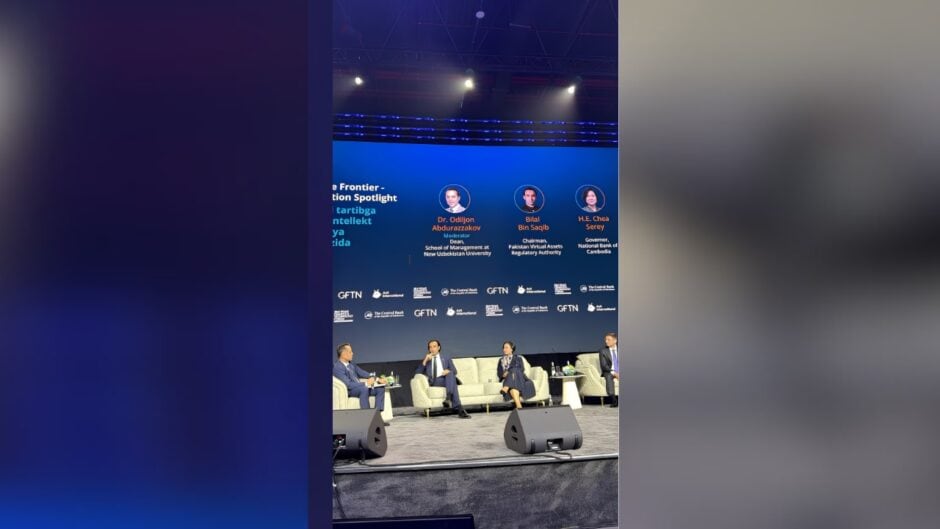
Pakistan reversed its restrictive stance on virtual assets with formal regulatory establishment. Minister Bilal Bin Saqib addressed the Silk Road Finance and Technology Forum in Tashkent on August 25, 2026. Pakistan now positions itself as an emerging market fintech regulatory leader.
Pakistan enacted the Virtual Assets Act in 2026, establishing PVARA as dedicated regulator. The authority notified licensing regulations and opened its licensing portal on August 25. Virtual asset service providers now operate within supervised regulatory environments rather than offshore channels.
Prior restrictions pushed significant activity toward unregulated platforms and peer-to-peer transactions. This approach reduced regulatory visibility and left consumers without protection. Formal regulation brings innovation within governmental oversight while enabling legitimate business development.
State Bank of Pakistan issued Circular 10 permitting regulated banks to serve licensed virtual asset providers. Segregated client-money accounts protect consumer assets while enabling institutional participation. The framework balances innovation acceleration with consumer protection standards.
Bilal Bin Saqib emphasized artificial intelligence’s transformational impact on financial institutions themselves. Regulators must deploy technology matching the speed of digital financial markets. Supervisory capacity requires equivalent technological advancement to maintain systemic stability.
Tokenization represents the next significant capital markets evolution. Pakistan studies digitally native sovereign notes issued on regulated blockchain infrastructure. Same-day settlement and interoperability with existing financial systems remain central requirements.
Tokenized sovereign bonds could reduce investment minimums for Pakistani diaspora participation. Smaller ticket sizes improve access for international investors. Transparent securities ownership records and connected coupon distribution align with traditional finance.
PVARA’s regulatory sandbox enables developers and entrepreneurs testing new technologies. Supervised environments permit product development before market-wide deployment. Solutions across tokenization, payments, custody and compliance technology receive structured support.
Bilal Bin Saqib stressed that Pakistan’s young population should build emerging technology companies rather than simply consuming innovations. AI and blockchain represent industries for entrepreneurial development. Small teams deploying agentic AI and automation can build capabilities previously requiring large organizations.
Pakistan’s strategic objective extends beyond present technology regulation toward tomorrow’s financial competition. Regulatory clarity, digital infrastructure and institutional capacity position Pakistan for future leadership. The transition from prohibition toward innovation-enabling regulation reflects sophisticated technology policy evolution.
The framework demonstrates sophisticated understanding that technological restriction fails while regulatory innovation enables national development.