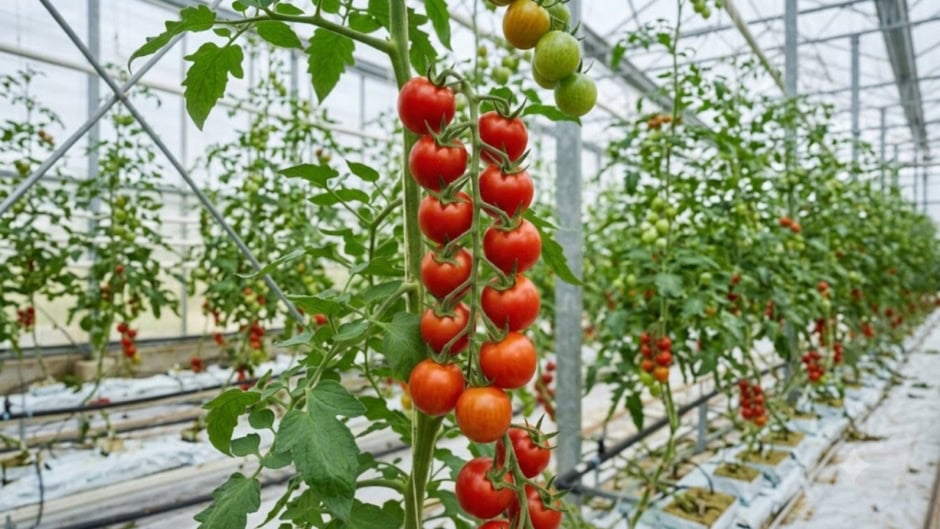
Scientists at the Vegetable Research Institute in Faisalabad are developing high-yielding, heat-tolerant tomato hybrids designed to reduce recurring shortages in Pakistan’s produce market.
Ghazanfar Hammad, Principal Scientist at VRI, said the new varieties will be ready for commercial release within two to three years. The hybrids are being engineered to withstand high temperatures and exhibit tolerance to viral diseases common in Pakistan’s climate.
“The local cherry tomato varieties will provide Pakistani consumers with vegetables of different taste, color and sizes,” he added.
Pakistan produces approximately 4.2 million tons of tomatoes annually. However, the country’s tomato processing industry remains severely underdeveloped, meaning almost all production enters the fresh market. Demand stays relatively constant year-round, but supply fluctuates dramatically by season. This volatility causes periodic shortages and sharp price spikes that harm both consumers and smaller farmers.
Tomato cultivation in Punjab concentrates in eight districts: Muzaffargarh, Khushab, Sheikhupura, Multan, Faisalabad, Vehari, Khanewal, and Gujranwala. The province supplies markets from April to June. Khyber Pakhtunkhwa and Balochistan supply June through November.
Sindh meets demand from December to April. However, disruptions from extreme weather, floods, and regional instability frequently trigger severe shortages.
Pakistan typically imports tomatoes from Iran and Afghanistan to bridge supply gaps. This year, ongoing regional conflict prevented imports from both nations, causing tomato prices to skyrocket to Rs350 per kilogram in June 2026.
VRI is simultaneously developing local cherry tomato varieties for home gardeners and commercial growers. These vegetables will offer Pakistani consumers different tastes, colors, and sizes currently unavailable locally.
Tomatoes are highly perishable nature limits storage life. Preservation as paste, chutney, or ketchup during glut seasons enables year-round availability.