Proton launched Lumo Desktop for Windows, macOS, and Linux on Tuesday. The app brings the company’s privacy-focused AI assistant to personal computers with granular controls over exactly what the AI can access, automate, and execute.
The release positions Lumo as a direct alternative to ChatGPT and Claude desktop apps.
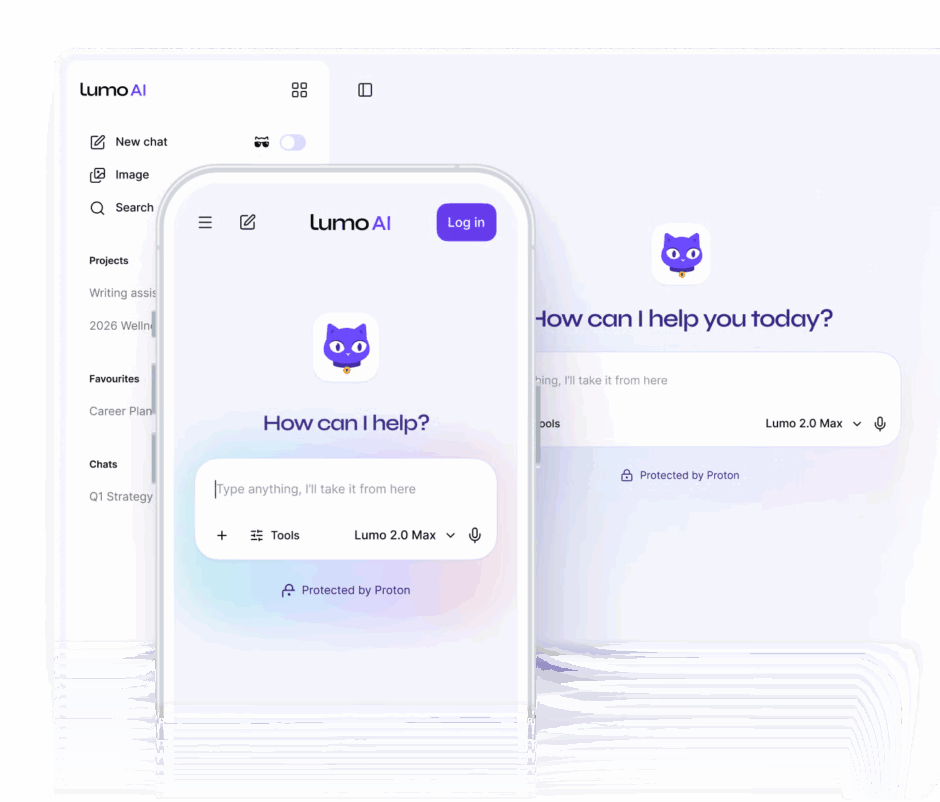
Lumo Desktop connects to local files, Proton’s email app, and third-party services including Confluence, Dropbox, and Jira. It also supports local and remote MCP (Model Context Protocol) servers, the same standard that AI agents use to access external data sources. Additionally, users can run shell commands and fetch browser content through the app.
The key differentiator sits in the permission system. For each connector, users choose which actions Lumo performs automatically, which require approval before executing, and which are blocked entirely. Users can also disable individual tools mid-conversation from the Tools menu. Scheduled tasks carry their own separate permission sets as well. As a result, users maintain control at every layer rather than granting blanket access.
Proton’s privacy architecture backs those controls with encryption. The company encrypts chat histories so that only the user can read them, not Proton itself. It keeps no server-side logs. All data lives on European infrastructure hosted in Switzerland, outside the reach of the US CLOUD Act. Proton explicitly states that conversations and connected app data never train AI models or serve personalized ads.
That approach arrives at a timely moment. Just this week, Apple announced tightened security settings for Mac apps that request Full Disk Access, a direct response to growing concerns about AI desktop tools accessing personal data. OpenAI, Anthropic, and Meta all offer desktop AI tools, but each requires users to trust the provider with broad access to local files and system resources.
The app also supports Skills, which let users save reusable instructions, templates, and reference files across conversations. Users who previously created Custom Lumos will see those migrate to the new Skills format automatically.
On the infrastructure side, Proton revealed it is building its first NVIDIA B300 cluster based on Open Compute Project standards in Switzerland. That investment signals the company plans to run its own AI inference rather than depending entirely on third-party cloud providers.
For privacy-conscious users who want AI automation without surrendering data control, Lumo Desktop offers something ChatGPT and Claude currently do not: a permission model that treats every action as opt-in rather than opt-out.