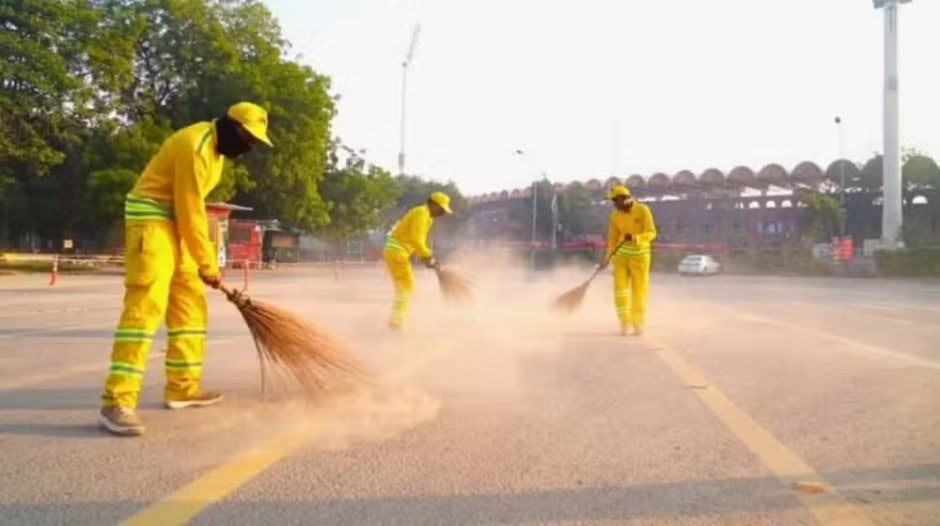
Punjab Chief Minister Maryam Nawaz has launched an AI-powered sanitation monitoring system aimed at improving waste management, transparency, and efficiency across the province.
The system has been introduced under the government’s flagship Suthra Punjab initiative, marking a major step toward digitizing sanitation operations.
Officials said the new system will provide real-time oversight of sanitation activities across Punjab, including:
- Monitoring more than 40,000 sanitation vehicles
- Tracking over 176,000 sanitation workers
- Using camera-equipped motorbikes to detect garbage in real time
- Sending live updates to a centralized control system
The initiative aims to ensure better service delivery and eliminate inefficiencies in waste management.
Speaking at the launch, the chief minister stressed that administrative decisions would be made strictly on merit.
She said political interference in postings and transfers had been eliminated, adding that she had resisted pressure from lawmakers and ministers.
Officials were urged to uphold merit-based governance and resist external influence in administrative matters.
Maryam Nawaz reiterated a strict stance against corruption and ghost employees within the sanitation system. She emphasized full documentation, transparency, and adherence to performance indicators (KPIs) to ensure accountability.
Describing Suthra Punjab as a “social transformation,” the chief minister said the goal is to ensure uniform cleanliness standards across both urban and rural areas.
She cited countries like Japan and Singapore as examples, stressing that every village should meet the same sanitation standards as major cities.
The chief minister also criticized recent protest actions by sanitation workers, where garbage was reportedly dumped on streets over unpaid salaries. While acknowledging the right to protest, she termed such actions unacceptable.
The AI-driven system is expected to play a key role in modernizing Punjab’s sanitation infrastructure and improving public service delivery.