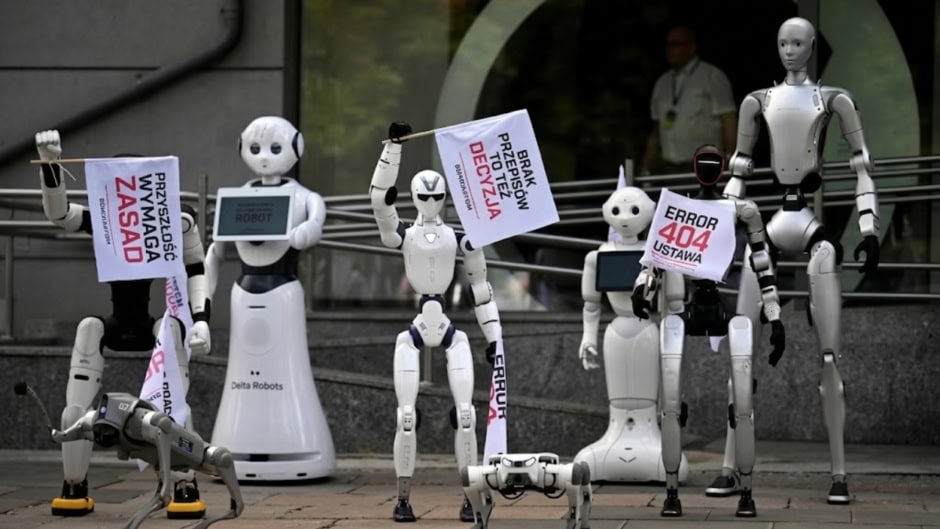
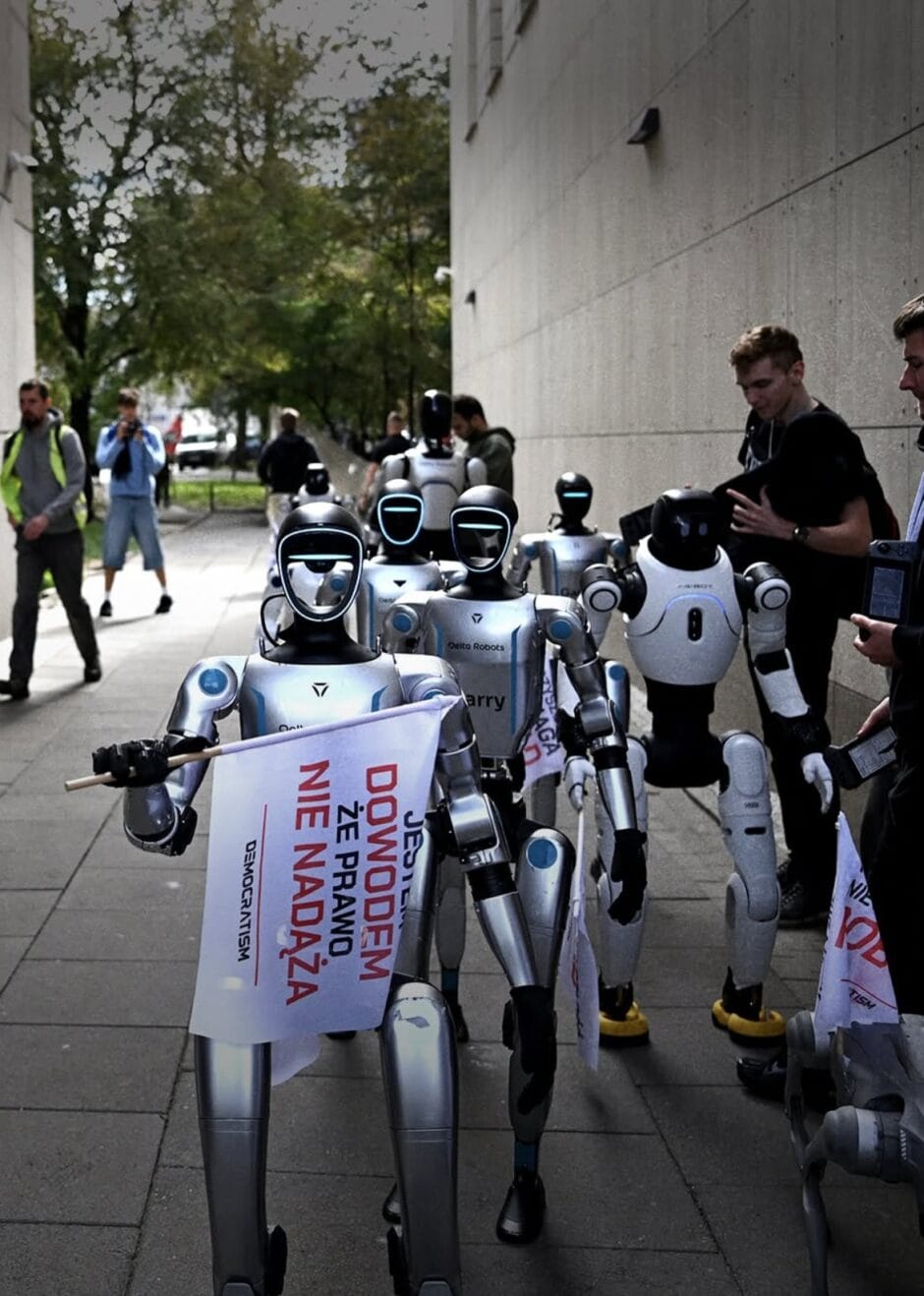
In a striking and surreal scene, around 30 robots took to the streets of Warsaw to campaign for stronger AI regulation. The demonstration unfolded outside the Polish Ministry of Digital Affairs. Robots waved Polish flags, chanted slogans, and marched in circles.
An initiative called Democratism organized the unusual protest. According to its website, the group aims to launch public debate. Specifically, it examines how AI and robotization affect the labor market. The protesting machines ranged from bipedal humanoids to dog-like quadrupeds.
Loudspeakers broadcast pointed chants throughout the demonstration. These included “Defend workplaces,” “Time for rules,” and “Don’t wait, regulate.” One AI-powered humanoid robot, named Agibot A3, addressed journalists directly. It said the technology present is already a functioning reality today.
Organizer Grzegorz Kulis explained the campaign’s central concern clearly. He wants to address the potential replacement of human workers. Notably, this extends beyond physical labor into cognitive work too. The organizers flagged administrative, customer service, and analysis roles specifically. They argued society must decide who prepares people for these changes.
Kulis warned that inaction now could create serious problems soon. Therefore, he stressed the urgent need for protective rules. He described these regulations as a shield safeguarding workers. However, he insisted the goal was not fighting technological progress itself.
Interestingly, a sharp irony sits at the protest’s heart. Kulis also leads a robotics company and a long-running recruitment firm. Consequently, the robots warning of job losses came from that very industry. He said he feels personally responsible for informing society about these changes.
The demonstration drew a notable official response too. Poland’s Digital Affairs Minister and Deputy PM Krzysztof Gawkowski attended personally. He acknowledged the real risks from uncontrolled, evolving AI models. Notably, Gawkowski said Poland is the first EU country regulating AI markets. He also announced plans for a dedicated AI development and security commission.