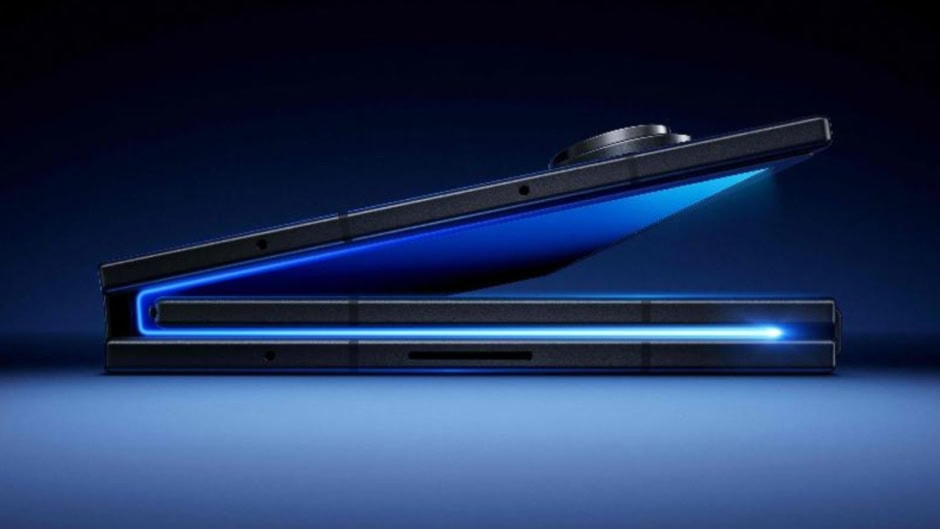
When Samsung introduced the Galaxy Z TriFold last December, the device turned heads for its ambitious design. However, one detail stood out for a different reason. The phone shipped with a 5,600 mAh battery, which felt modest in a market where even non-folding phones now push higher limits. Some foldables already carry batteries in the 6,000 mAh range.
That gap raised an obvious question. Why would a premium trifold device settle for 5,600 mAh? The answer may lie in battery chemistry. Several Chinese brands have started using silicon-carbon, or Si/C, batteries. These cells store more energy in the same physical space. Yet Samsung has continued to avoid Si/C batteries, even in 2026. As a result, its foldables still rely on more traditional lithium-ion technology.
Meanwhile, Honor has moved ahead with this approach. The company’s recently unveiled Magic V6 foldable packs a 6,600 mAh Si/C battery. That larger capacity fits inside a slim foldable body, which highlights the advantage of the newer chemistry.
Curious about the real-world impact, the team at Strange Parts decided to experiment. They took Si/C batteries from Honor and installed them inside the Galaxy Z TriFold. The results were striking.

After the swap, the TriFold’s battery capacity jumped by about 71%. In raw numbers, the device moved from 5,600 mAh to 9,600 mAh. That is a massive leap for the same hardware footprint.
Of course, this was not an official modification. It was a hands-on test by experienced tinkerers. Still, the experiment makes one thing clear. Battery chemistry now plays a major role in how far foldables can go.
For Samsung, the decision to skip Si/C batteries shapes the limits of its devices. For rivals like Honor, the shift to silicon-carbon cells creates room for bigger batteries without thicker designs. As foldables become more mainstream, that difference could matter more than ever.