I recently tried a new Samsung smartphone feature called Privacy Display, and it’s clear to me that every phone should have something like this. The feature prevents people nearby from seeing what’s on your screen. Samsung introduced it on the Galaxy S26 Ultra, unveiled on Wednesday, making it the first device to include a built-in privacy display.
A person looking at your screen could see sensitive information: your bank balance, emails, or even the code you use to unlock your phone. There have been cases where thieves watched people enter passcodes and then locked them out of their own devices. Privacy Display is designed to stop that kind of spying. After using it for a few hours, I can see how it protects both your data and your privacy in public spaces, like keeping the details of a binge-watch hidden from fellow passengers. Apple and other smartphone makers should seriously consider adding this.
How Privacy Display Works
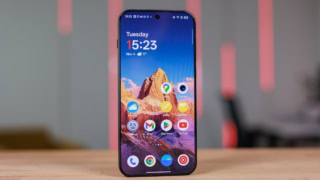
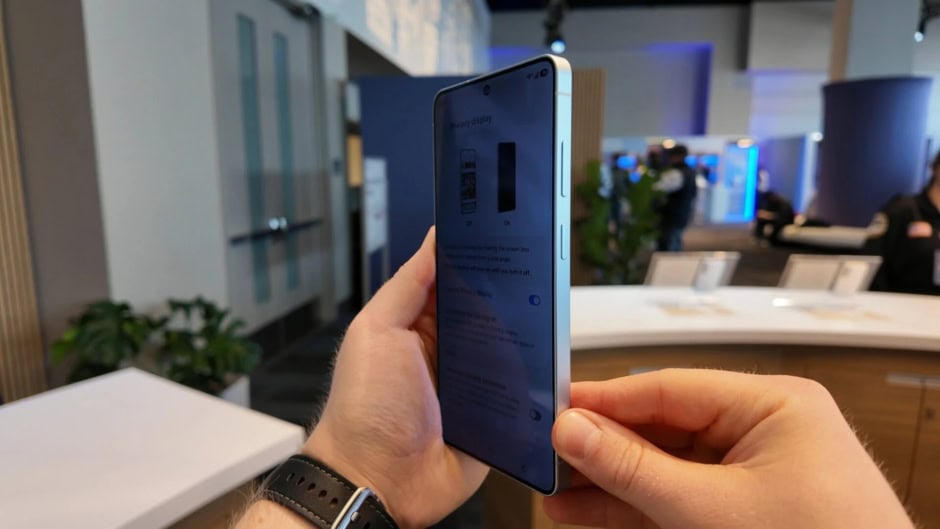
When you look straight at the screen, everything appears normal. At a demo in San Francisco, I picked up the $1,300 Galaxy S26 Ultra and had to check whether the feature was even on. Once I tilted the phone slightly, the display went dark, as if it had turned off entirely.
This isn’t a software trick; it’s a physical innovation in the OLED display. Samsung separates wide pixels, which emit light to the sides, from narrow pixels that face forward. In privacy mode, the wide pixels dim while the narrow ones focus light only toward your face.
The screen remains clear within about a 30-degree viewing angle but goes dark beyond that. It works like the plastic privacy filters many people use, but without their limitations. Plastic filters block only side views and can make the screen harder to use. Samsung’s system can also block only parts of the screen and turn the privacy mode off when you don’t need it.
You can set Privacy Display to activate automatically when entering your passcode or using apps like a password manager. It can hide incoming notifications, showing only the pop-up, and you can set routines to turn it off at home. It’s not perfect. I could still see the PIN pad when standing directly behind someone holding the phone.
Charles Uptegrove, Samsung’s product manager, said the technology took five years to develop. He also mentioned that dimming the wide pixels might save battery life, though the company isn’t officially claiming that. I plan to test this myself.
Limited Availability
Currently, Privacy Display is only on the $1,300 Galaxy S26 Ultra, which ships on March 11. Because it requires specific hardware, it cannot be added to other phones via software updates.
Samsung may expand the feature to other devices in the future. Since Apple uses Samsung’s displays in iPhones, it’s possible the technology could appear there as well, though Uptegrove wouldn’t comment on that.
As someone who uses iPhones, Google Pixel phones, and Samsung devices, here’s my take: our phones hold almost everything about us, and the passcode protecting them is crucial. If all phones had this disappearing-screen feature, digital privacy in public could improve dramatically.