SpaceX has confirmed the disposal of 260 Starlink satellites between December 2025 and May 2026 through controlled atmospheric re-entry. The company disclosed this in a semi-annual report submitted to the Federal Communications Commission (FCC) earlier this month.
Of the vaporized satellites, 176 belonged to the first-generation Starlink constellation, with the remainder from newer Gen2 models. An additional 349 satellites have been decommissioned and are queued for disposal in coming months.
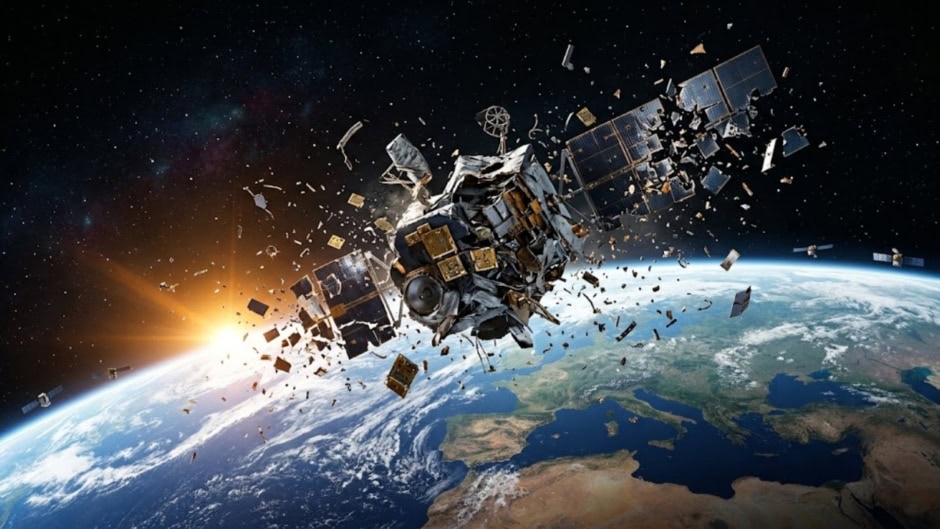
The disposal method involves steering satellites into Earth’s atmosphere, where intense friction at 27,000 kilometers per hour burns them completely. This approach avoids the hazard of large debris reaching the surface. SpaceX achieved a disposal reliability rate exceeding 99%, well above the FCC’s required 95% minimum. The vaporization process is intentional and controlled, designed to ensure complete disintegration.
However, scientists are raising environmental concerns about the chemical composition of atmospheric burn-ups. When aluminum-chassis satellites vaporize, they release microscopic aluminum oxide particulates into the upper stratosphere. Researchers urge further study on how repeated atmospheric burn-ups affect upper-atmosphere chemistry. To date, atmospheric pollution from satellite re-entries has measurably increased since the megaconstellation era began in 2020.
The FCC has traditionally excluded satellites from environmental reviews out of concern that regulation might slow the space industry. The agency is now formally proposing to exclude space-based activities from National Environmental Policy Act reviews, citing that impacts fall outside U.S. jurisdiction. This proposal remains under consideration.
Current Starlink Gen2 satellites weigh approximately 800 kilograms, nearly three times heavier than original models at 260 kilograms. SpaceX operates over 10,000 satellites currently and plans eventual expansion to 42,000 units.
The company is also developing orbital data centers using satellite platforms with expanded compute payloads. At this scale, atmospheric disposal becomes a constant operation.