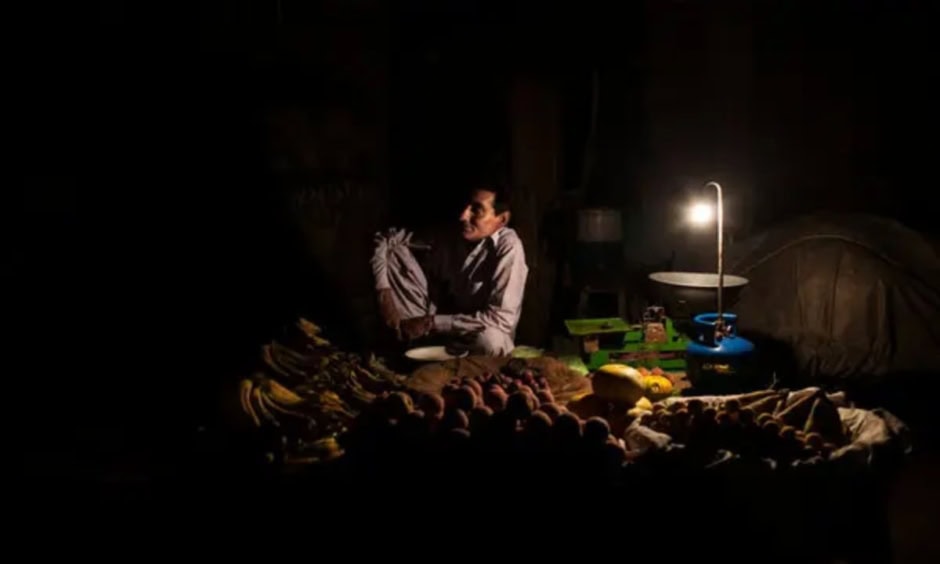
A joint international report has revealed that 10.8 million Pakistanis lived without access to electricity in 2024, placing Pakistan among the 20 largest electricity-deficit countries in world.
The Tracking SDG 7: The Energy Progress Report 2026 published by the World Bank (WB), World Health Organization (WHO), International Energy Agency (IEA), International Renewable Energy Agency (IRENA), and the United Nations warned that the world is not on track to achieve universal access to affordable, reliable, sustainable, and modern energy by the 2030 target.
Globally, 655 million people remained without power in 2024 as global electricity access stagnated at 92 percent.
Pakistan and Myanmar (10.7 million) were the only two countries outside of Sub-Saharan Africa included in the top 20 electricity-deficit nations.
Nigeria topped the global deficit list with 87.2 million people lacking electricity, followed by the Democratic Republic of Congo with 84.7 million and Ethiopia with 57.3 million.
While Central and Southern Asia reduced its share of the global electricity deficit from 36 percent in 2010 to 3 percent in 2024 through grid expansion and rural electrification, affordability and service quality remain major regional barriers.
Finances present a significant obstacle to universal access, as only 22 percent of households currently without electricity earn enough to cover basic monthly service costs.
Connection charges, internal wiring, and monthly bills often remain prohibitive even where physical infrastructure exists. To bridge these gaps in remote and underserved communities, the report noted an increasing deployment of distributed renewable energy systems, such as off-grid solar solutions and mini-grids.
The deficit remains heavily concentrated in Sub-Saharan Africa, which accounted for 563 million of the 655 million people without electricity in 2024 due to rapid population growth, infrastructure constraints, and financing gaps.
Furthermore, the report estimated that two billion people worldwide still rely on polluting cooking fuels, resulting in indoor air pollution that causes approximately three million deaths annually.
International public financial flows supporting clean energy in developing countries reached US$24.6 billion in 2024, but financial support for the least-developed nations declined.
Current projections show that without accelerated investment, improved affordability, and expanded infrastructure access, approximately 645 million people will still lack electricity by 2030.