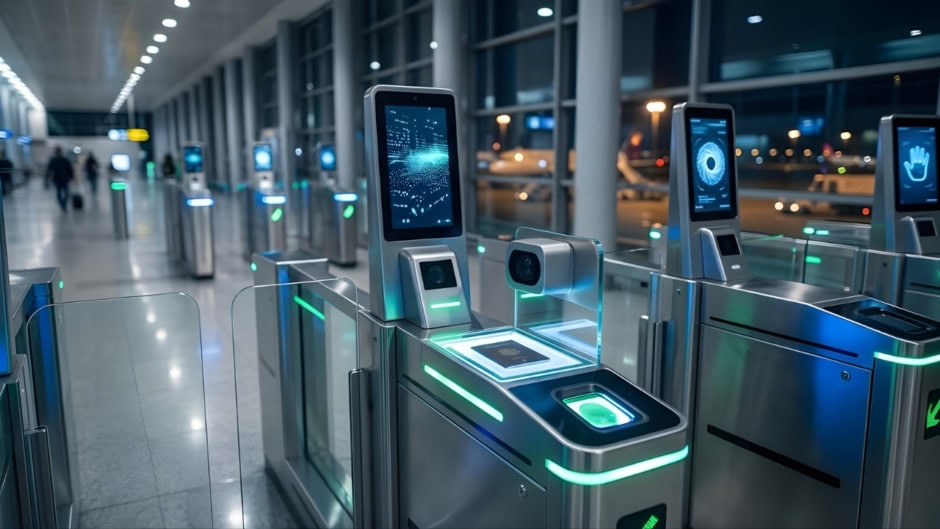
The administration of President Donald Trump is officially backing a $2.4 billion investment offer to overhaul security at major Pakistani airports. American firm Securiport has proposed installing Advanced Passenger Information (API) and Passenger Name Record (PNR) systems. These advanced technologies will detect criminals and transnational threats in real-time.
US Charge d’Affaires to Pakistan, Natalie A Baker, recently supported this proposal in correspondence with the Ministry of Defence. Consequently, she has urged Pakistani authorities to carefully consider the deal.
Trump Backed Complete Security Overhaul
Securiport offers to fund all upfront investments for the deployment. The company plans to recover its costs through a government-mandated passenger security surcharge over a proposed 25-year contract. Furthermore, Securiport will establish a local subsidiary. Through this branch, the firm aims to train over 1,000 Pakistani citizens in modern technologies.
Under this proposal, the Federal Investigation Agency (FIA) will operate the API and PNR systems. This setup provides the government with an integrated, biometric-enabled border management plan. Most importantly, Pakistan will retain full ownership and custody of all data. Securiport guarantees secure data transport from airlines to the government, alongside dedicated 24/7 support.
The E-Gate Controversy
If Pakistan accepts the US offer, it could fast-track the installation of these critical systems. Currently, a separate move by the Pakistan Airports Authority (PAA) to install an automated E-gate system is facing severe backlash.
The PAA previously initiated global requests for proposals in 2020 and 2024. However, authorities ignored both expressions of interest. Instead, the PAA invoked Public Procurement Regulatory Authority (PPRA) direct contracting rules to award the project to a state-owned enterprise.
As a result, the Senate Standing Committee on Defence has raised major transparency concerns. The PAA’s proposed system includes biometric passport scanners and facial recognition technology. This tech aims to cut average passenger clearance times from five minutes down to under 45 seconds. Additionally, it integrates directly with the FIA’s exit control list, PNR systems, and Interpol databases.
Despite these operational benefits, Transparency International Pakistan recently approached the Prime Minister’s Office over alleged serious violations of PPRA rules regarding the contract award. Furthermore, the International Monetary Fund (IMF) has already demanded that Pakistan withdraw the specific PPRA rules that allow direct contracting to state-owned enterprises.
Currently, the US embassy spokesperson has declined to comment on the private diplomatic correspondence. The Minister for Defence has also remained silent on whether Pakistan plans to accept the $2.4 billion American offer.