Intel launched the Wildcat Lake Core 5 320 processor designed for affordable mobile devices responding to Apple’s disruptive $599 MacBook Neo that sent shockwaves through the Windows laptop market in March 2026. Early PassMark benchmark results show the Wildcat Lake chip delivering 21% faster multi-threaded performance than Apple’s A18 Pro processor used in the MacBook Neo while matching single-thread performance with scores of 15,222 and 4,047 respectively compared to the A18 Pro’s 4,066 single-thread result, according to tests reported by TweakTown and analyzed by Macworld senior editor Roman Loyola on April 29, 2026.
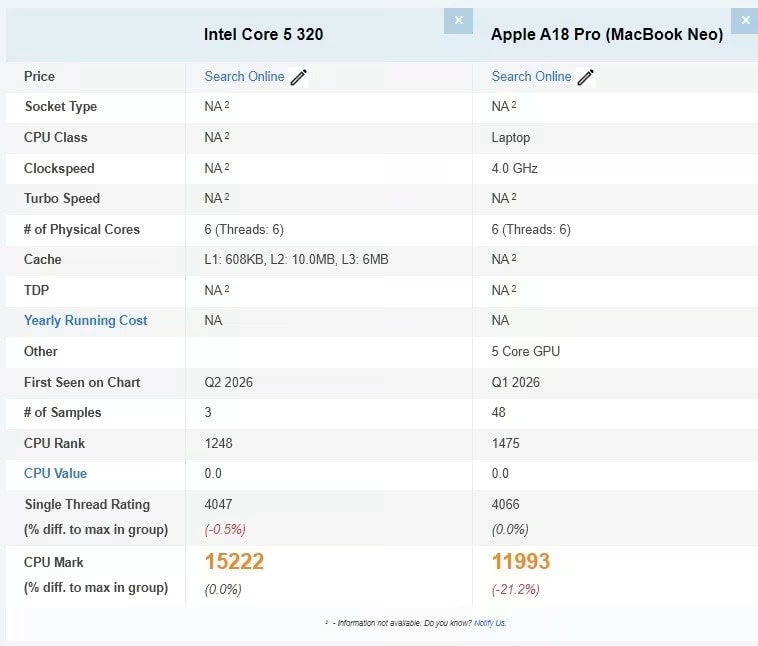
The Wildcat Lake Core Series 3 represents Intel’s strategic response to the MacBook Neo’s combination of $599 starting price, aluminum build quality, 16-hour battery life and A18 Pro performance that forced PC manufacturers and chip makers to respond quickly. Intel positioned the chip as part of its budget-focused Core Series 3 family based on the Panther Lake architecture and 18A manufacturing process, targeting everyday productivity with up to 47% better single-thread performance and 2.7 times improved artificial intelligence capabilities compared to older Core 7 150U processors.
However, industry analysts including Macworld’s Loyola argue that raw benchmark performance represents only part of the competitive equation facing Windows laptop manufacturers attempting to match the MacBook Neo’s market disruption. The MacBook Neo combines solid aluminum construction with macOS optimization, reliable battery efficiency and bloatware-free software experience in ways that most budget Windows laptops struggle to replicate despite potentially faster processor speeds.
The pricing challenge remains uncertain as Intel has not disclosed the Wildcat Lake chip cost and early laptop implementations suggest pricing significantly above the MacBook Neo’s $599 threshold. The Honor MagicBook 14 featuring the new Intel chip launched in China at 6,999 yuan translating to approximately $1,026 at current exchange rates, still hundreds of dollars higher than Apple’s entry-level offering.
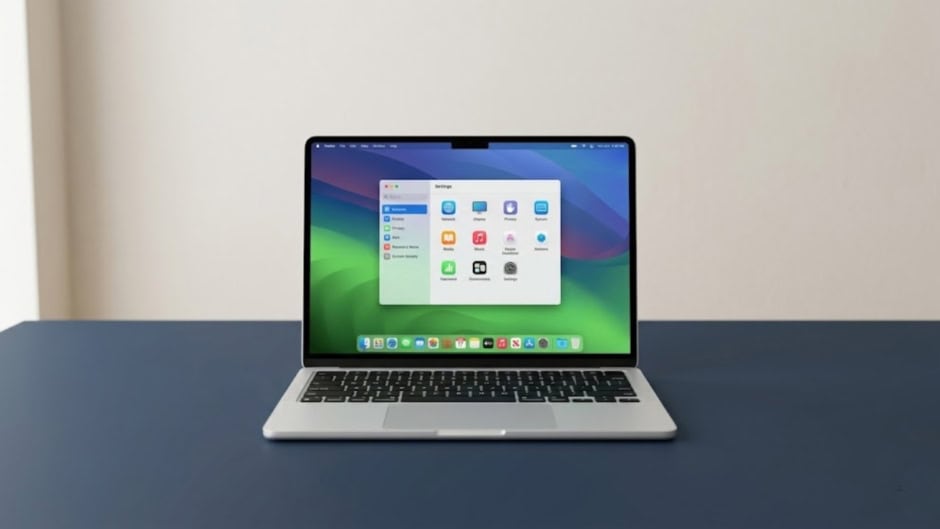
The MacBook Neo announcement on March 4, 2026 marked Apple’s entry into the ultra-affordable laptop segment with the company’s lowest-priced laptop ever at $599 for general buyers and $499 for education customers. The device features a 13-inch Liquid Retina display, aluminum body available in four colors, fanless passive cooling running completely silently, and up to 16 hours of battery life powered by the same A18 Pro chip found in iPhone models.
Windows laptop market observers note that budget PC segments face challenges beyond processor performance including inconsistent build quality across manufacturers, screens with poor viewing quality, inadequate keyboards and trackpads, and Windows 11 performance requirements that observers suggest need minimum 16GB RAM compared to the MacBook Neo’s 8GB unified memory architecture.