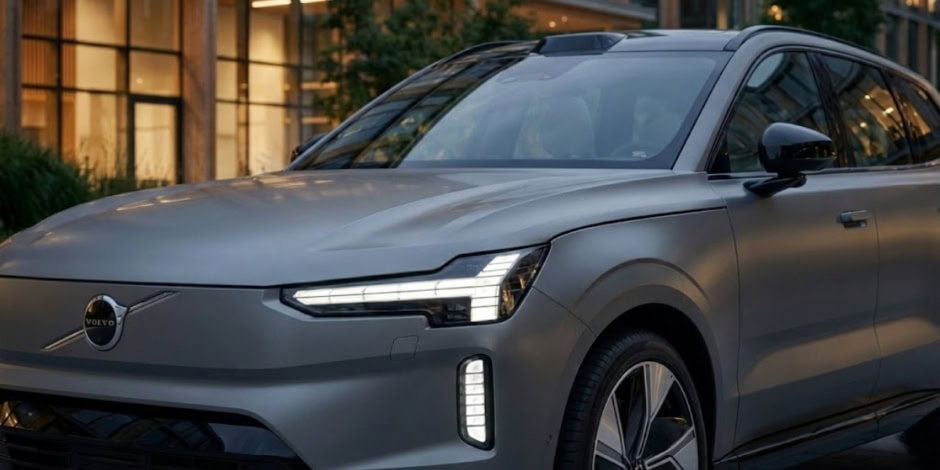
Swedish automaker Volvo Cars has officially launched the EX60, an electric SUV that pairs zero-emission driving with advanced Google Gemini capabilities. signaling a new phase in the company’s electrification and smart mobility strategy. Volvo confirmed the new model represents both a technical evolution and a design milestone, positioning the EX60 as a contender in an increasingly competitive electric SUV segment.
The EX60 is powered by a dual-chip system that combines the NVIDIA DRIVE AGX Orin and Qualcomm Snapdragon 8255 processors. Together, they can handle over 250 trillion operations per second, making real-time AI processing possible for safety, navigation, and cabin systems.
With Google Gemini, gone are the days of command-based voice assistants. Now, drivers can engage in natural conversations and make complex, multi-step requests without needing to follow specific prompts.
The EX60 is built on Volvo’s scalable modular architecture, which supports larger battery capacity and optimized electric power delivery for improved range and performance. Volvo said that the new platform allows the SUV to maintain robust safety standards while accommodating a suite of next-generation AI tools developed in collaboration with leading technology partners.
Central to the EX60’s innovation is the integration of Gemini AI, a proprietary system designed to enhance driver assistance, in-car experience, and vehicle learning. According to Volvo, the AI suite is capable of interpreting driver preferences, optimizing energy management, and providing personalized route guidance, features the company says will deliver a more intuitive and seamless driving experience.
In announcing the EX60 with Gemini AI, Volvo executives emphasized the role of artificial intelligence not just as a convenience feature but as a tool for enhancing safety and efficiency. The SUV includes advanced sensor arrays, machine perception systems, and predictive analytics that can anticipate road conditions, assist in collision avoidance, and provide real-time feedback to drivers. These systems are also designed to support over-the-air updates, ensuring that vehicle capabilities can evolve long after initial purchase.
View this post on Instagram
The automaker has framed the EX60 as part of its broader commitment to sustainability. Volvo has pledged that by 2030 all its cars will be fully electric, and that its global operations will achieve carbon neutrality. The EX60’s electric powertrain, combined with recycled and sustainable interior materials, is intended to support those environmental goals while delivering competitive performance and range, key concerns for EV buyers today.
Industry analysts say that Volvo’s AI emphasis aligns with rising demand for intelligent mobility solutions. Competitors across the automotive industry, such as Tesla, BMW, and Mercedes-Benz, have increasingly incorporated artificial intelligence in areas ranging from autonomous driving assistance to personalized infotainment. Volvo’s approach seeks to balance smart automation with robust safety systems and human oversight, addressing concerns that fully autonomous features may outpace regulatory frameworks or driver readiness.
The design of the EX60 comes with the classic Volvo’s Scandinavian roots, with a minimalist interior layout focused on comfort, ergonomics, and sustainability. Standard features include panoramic glass roofs, intuitive touchscreen control surfaces, and premium driver assistance packages that complement the AI systems.
Volvo also highlighted its commitment to customer support and connectivity. The EX60 will include access to cloud-based services, smart charging interfaces compatible with major EV infrastructure networks, and integrated apps designed to streamline vehicle management and trip planning.
Early market reaction suggests that the EX60 could attract buyers who prioritize both environmental responsibility and digital innovation. As electric SUVs continue to dominate consumer interest, automakers capable of integrating advanced intelligence with practical performance are expected to lead the segment.
The launch of the EX60 also comes in between broader global shifts toward electrification and mobility digitization, with governments in Europe, North America, and Asia tightening emissions standards and promoting incentives for zero-emission vehicles. Volvo’s new SUV is positioned to benefit from these policy trends, while also contributing to industry momentum around smarter, more connected transportation solutions.
The EX60 marks the first production vehicle built on Volvo’s SPA3 800V architecture. The company said pricing and regional availability details will be released closer to market rollout, with initial deliveries expected later this year.