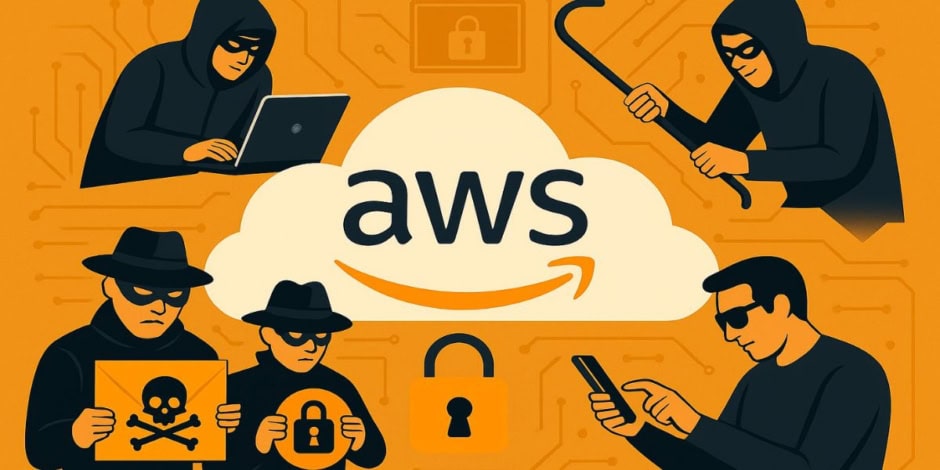
A widespread outage at Amazon Web Services (AWS) that disrupted thousands of websites and apps worldwide has raised alarm among cybersecurity experts, who warn that the incident creates a “perfect phishing storm.”
More than six million user reports were logged in the outage’s early hours, putting affected individuals at elevated risk of scams that exploit confusion, urgency, and compromised services.
What Happened
The outage began in AWS’s US-EAST-1 region in Virginia and quickly cascaded through its global infrastructure, affecting major digital platforms including Snapchat, Reddit, Venmo, Coinbase, and many others.
AWS attributed the failure to a monitoring subsystem malfunction impacting load balancers and DNS resolution rather than a cyberattack.
Why This Is a Phishing Risk
Cybersecurity analysts say that major outages create conditions ripe for exploitation.
Disruptions leave users unable to access accounts and services, heightening urgency and panic—prime triggers for phishing schemes.
Scammers can craft highly convincing messages claiming to be from affected services, offering “account recovery,” “refunds,” or “discounts” tied to the outage. AI-facilitated phishing tools make this even easier.
With backend systems unstable, legitimate verification and support processes may be delayed, reducing user confidence and increasing susceptibility to malicious prompts.
Charlotte Wilson, enterprise head at Check Point Software, explained that during outages, users should expect a spike in fake “refund” or “discount” offers, phishing emails, and scam links claiming to fix the problem.
What to Watch For
- Users and organizations impacted by AWS-powered services should stay alert for:
- Emails, texts, or calls claiming to restore access to services or offer compensation for downtime
- Links or attachments referencing the outage or offering immediate action
- Contact from supposed “support” staff asking for credentials, codes, or device access
- Urgent messages citing missed transactions or requests to validate your account
How to Protect Yourself
Security experts recommend the following steps:
- Pause before responding to any service-access request until you verify the source independently
- Type the official domain manually rather than clicking links in messages
- Enable multi-factor authentication (MFA) on all critical accounts
- Use unique, strong passwords and a trusted password manager
- Check your account activity for unusual logins, failed transactions, or changes
- Avoid entering credentials or downloading attachments when services you use are already disrupted
The Broader Implications
The outage highlights the dangers of heavy reliance on a single cloud provider. When AWS falters, its disruption can cascade across industries: from banking and e-commerce to consumer apps and infrastructure. Experts say this incident also underscores the need for organizations to plan for alternative infrastructure, segmented access controls, and resilience to social engineering risks triggered by service failures.