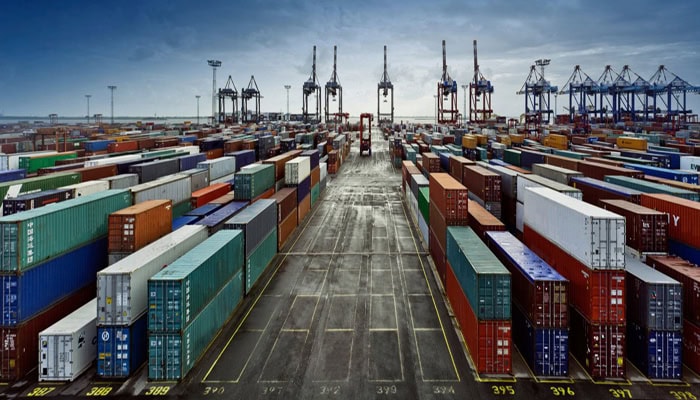
The federal government has outlined an aggressive three-year roadmap to accelerate Pakistan’s economic recovery, targeting stronger growth, higher exports, and record remittances. Under the new plan, GDP growth is expected to rise between 4.2% and 5.7%, while the national economy could expand to Rs162,513 billion by 2028.
According to the Three-Year Macroeconomic and Fiscal Framework released by the Ministry of Finance, the government aims to drive broad-based growth through higher trade performance and investment inflows. The report anticipates strong gains in exports, remittances, and tax revenues, signaling optimism for Pakistan’s medium-term economic outlook.
Exports and Remittances to Reach Record Levels
Exports are projected to jump from $44.83 billion to $55 billion over the next three years, an increase of more than $10 billion. Of this, exports of goods are expected to reach $42.69 billion, while services, including IT exports, could touch $12.24 billion.
For the current fiscal year, Pakistan’s goods exports are estimated at $35.28 billion, with services at $8.38 billion. Imports are forecast to rise by $14.5 billion, hitting $79.71 billion. Meanwhile, remittances are expected to climb to a record $44.82 billion, compared with $39.43 billion projected for this year.
IMF and World Bank Project Growth
The International Monetary Fund (IMF) has projected Pakistan’s economic growth at 3.6% for the fiscal year 2025. However, sources familiar with recent IMF discussions said the Fund’s staff expects a slightly lower range of 3% to 3.5%, citing flood-related losses that have weakened the agriculture sector and reduced the output of key Kharif crops.
Acknowledging these challenges, the government has revised its own growth target from 4.2% to 3.5%, while the World Bank projects a slower 2.6% expansion. Even in the medium term, the IMF does not foresee growth surpassing 4.5% unless Pakistan achieves a significant increase in exports and investment.
The IMF’s Executive Board is expected to approve the third installment of $1 billion for Pakistan under the Extended Fund Facility (EFF) in December. Additionally, Pakistan is likely to receive $200 million in climate financing through the Climate Resilience Financing mechanism.
The staff-level agreement between Pakistan and the IMF was finalized on October 15, and officials at the Ministry of Finance remain confident that the next tranche will be cleared on schedule.