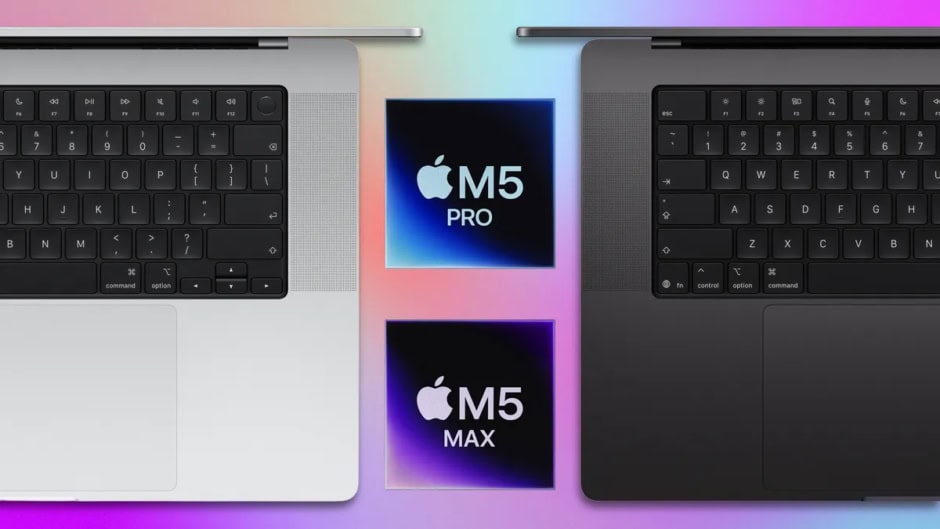
Apple has introduced its latest Mac lineup for 2026. The company has updated the MacBook Air and MacBook Pro with its latest M5 processors, including the new M5 Pro and M5 Max. At the same time, Apple has expanded its monitor lineup with two additions to the Studio Display family.
The upgrades focus on performance, connectivity, and higher storage options. However, buyers will also notice price increases across several models.
MacBook Air Gets M5 and More Storage
The 2026 MacBook Air now runs on Apple’s M5 chip. Apple first introduced this chip last year on the 14-inch MacBook Pro and iPad Pro. The new M5 keeps the same 10-core CPU design as the previous M4. It also offers either an 8-core or 10-core GPU.
While the core count remains unchanged, Apple says every core now runs faster. The GPU also includes a neural accelerator built into each core. That should improve AI-driven tasks and graphics-heavy workflows.
Storage sees a major upgrade. Apple has doubled the base storage from 256GB to 512GB. Users can now configure the MacBook Air with up to 4TB of storage. Memory starts at 16GB and still tops out at 32GB.
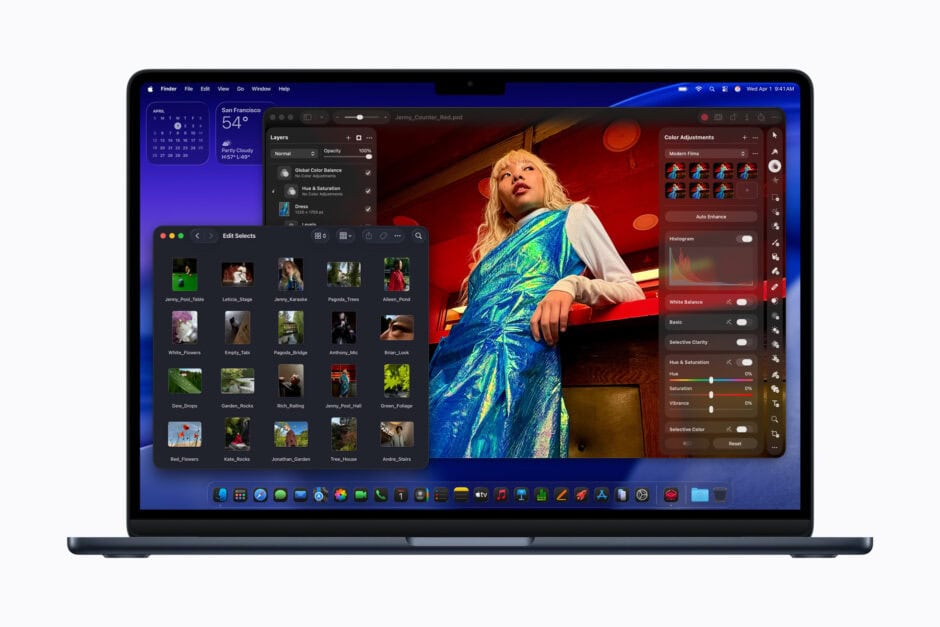
Connectivity also improves. The new MacBook Air supports Wi-Fi 7 and Bluetooth 6. Apple is also shipping a faster charger called the “40W Dynamic Power Adapter with 60W Max.” This replaces the previous 30W and 35W adapters.
Prices, however, have gone up by $100. The 13-inch MacBook Air now starts at $1099. The 15-inch version begins at $1299.
MacBook Pro Moves to M5 Pro and M5 Max
Apple has also refreshed the MacBook Pro lineup with the new M5 Pro and M5 Max chips. The 14-inch model supports three chip options: M5, M5 Pro, and M5 Max. Meanwhile, the 16-inch model is available only with the M5 Pro and M5 Max.
Both the M5 Pro and M5 Max use what Apple calls its “Fusion Architecture.” In simple terms, Apple combines two dies to form a single system on a chip with a higher core count. These chips include up to 6 high-performance cores, referred to as super cores, and up to 12 new performance cores.
GPU options vary widely. Buyers can choose configurations with 16, 20, 32, or 40 GPU cores, depending on the chip.
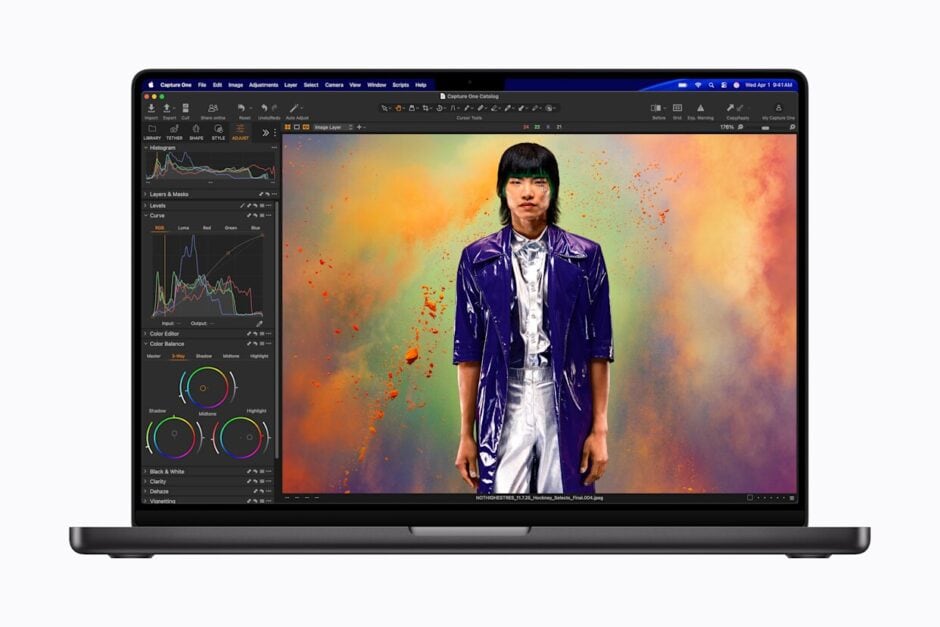
On the 14-inch MacBook Pro, the M5 Pro can be configured with a 15-core CPU and 18-core GPU. Both the 14-inch and 16-inch models can also be configured with an 18-core CPU and a 20-core GPU. The M5 Max offers two variants: an 18-core CPU with a 32-core GPU, or an 18-core CPU with a 40-core GPU.
Memory starts at 24GB for the M5 Pro. It scales up to 128GB for the M5 Max. Storage now begins at 1TB and can go up to 8TB.
Like the MacBook Air, the MacBook Pro models also support faster Wi-Fi and Bluetooth. However, pricing has increased by $200. The 14-inch MacBook Pro with M5 Pro now starts at $2,199. The 16-inch model starts at $2699.
Studio Display Gets Better Camera and Audio
Apple has also introduced an updated Studio Display. This model keeps the same 27-inch 5K 60Hz IPS panel as before. Pricing also remains unchanged at $1599.
However, Apple has improved the internals. The new Studio Display features a 12MP webcam. It also includes a new three-microphone array and a six-speaker system with spatial audio. In addition, it now supports Thunderbolt 5. These updates focus on creators and remote workers who rely on video calls and high-quality audio.

Studio Display XDR Brings 120Hz and Brighter HDR
The second monitor is the new Studio Display XDR. This model introduces a 27-inch 5K IPS panel with a 120Hz refresh rate. It also uses a new mini-LED backlighting system with 2304 local dimming zones.
Brightness is a key upgrade. The standard Studio Display peaks at 600 nits. In contrast, the Studio Display XDR reaches 1000 nits in SDR and 2000 nits in HDR. It also supports a wider range of reference color modes, including Adobe RGB.
Most other specifications remain the same as the standard Studio Display. However, the Studio Display XDR includes a tilt-and-height-adjustable stand. The regular Studio Display only offers a tilt-adjustable stand.
Apple has priced the Studio Display XDR at $3299. It replaces the Pro Display XDR, which the company has now discontinued.