
Pakistan’s 5G era officially began on March 19, 2026, when Jazz commercially launched its network following the PTA’s spectrum auction. Approximately 180 5G sites in 8 cities are now active in the first phase of the rollout, making Jazz one of the first operators in the country to go live with next-generation connectivity.
Jazz secured spectrum across all four key bands in the auction: 700 MHz, 2300 MHz, 2600 MHz, and 3500 MHz. That makes it the only Pakistani operator with a presence in every frequency layer, giving it a multi-layered network capable of delivering both wide coverage through the lower bands and high-capacity performance through the higher ones. The acquisition cost Jazz $239.375 million and takes its total spectrum holdings to 284.4 MHz.
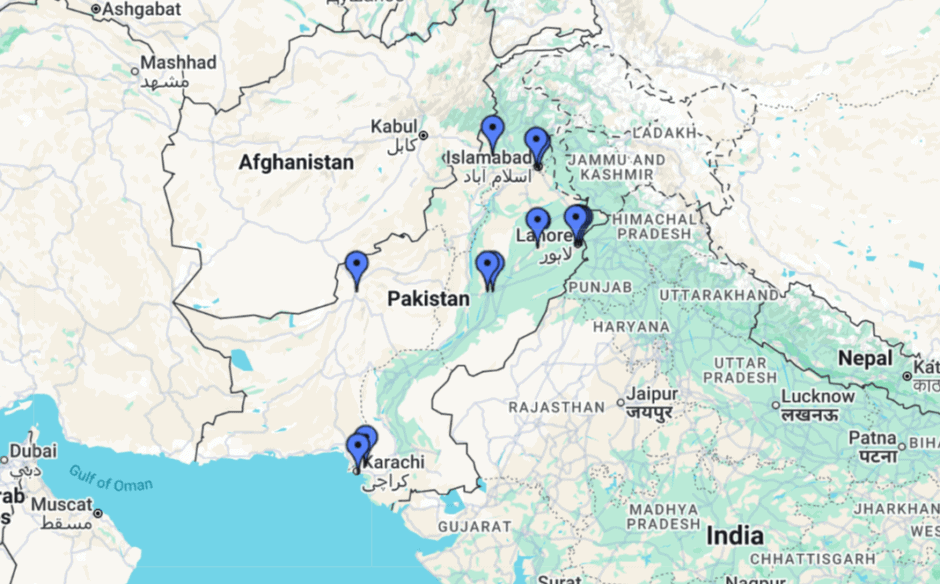
Jazz’s 5G is currently live in:
- Islamabad
- Rawalpindi
- Lahore
- Karachi
- Peshawar
- Quetta
- Multan
- Faisalabad
Coverage within these cities is limited to select areas, not citywide. Jazz has not yet published a detailed street-level coverage map, though its coverage map page is live. The company is expected to release a real-time availability tool as the rollout expands.
The launch is backed by a recently announced $1 billion investment commitment, adding to over $11 billion Jazz has invested in Pakistan over the past three decades. Jazz CEO Aamir Ibrahim said the company’s focus is on delivering faster, more reliable connectivity while ensuring that no Pakistani is left behind.
Despite these developments, there is a significant catch, however. Apple and Samsung, the two most popular smartphone brands in Pakistan, have not yet released the necessary 5G software patches for their devices in the country. This means that even users with 5G-capable iPhones or Galaxy phones standing inside a coverage zone may not be able to connect to the 5G network until these manufacturers push the required firmware updates.
Initial 5G speeds have been set at 50 Mbps, substantially faster than the existing 4G cap of 20 Mbps that was implemented following the spectrum auction. Real-world performance will vary based on congestion, distance from towers, and device capabilities.
PTA officials have indicated that stabilizing 5G coverage across the country could take approximately two years. The rollout is phased, with Jazz expanding and optimizing its network city by city as additional equipment arrives.