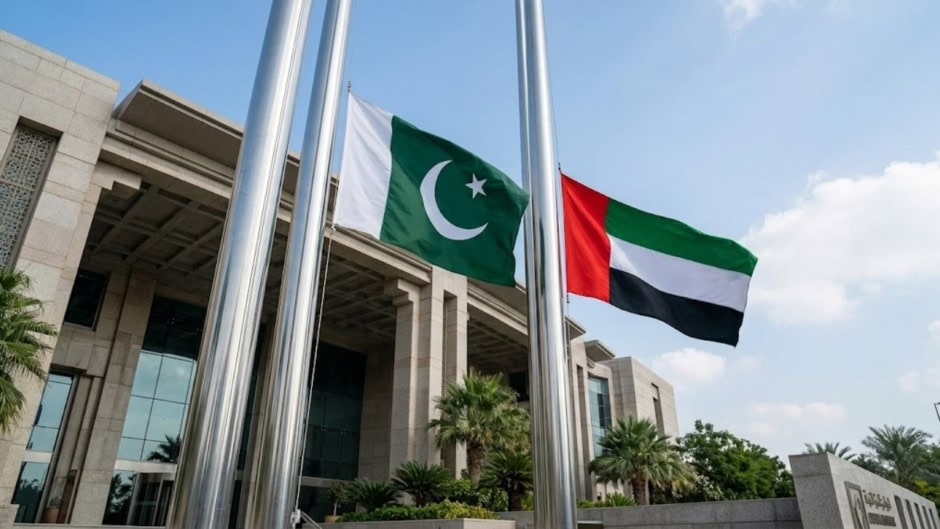
Pakistan has fully repaid its $3.45 billion debt deposit to the United Arab Emirates (UAE). The State Bank of Pakistan (SBP) confirmed this major financial milestone today, April 24, 2026. This move comes after a recent failure to roll over the loan facility. Consequently, the government prioritized national dignity over holding onto the borrowed funds.
State Bank of Pakistan repaid deposit of US$ 1 billion to Abu Dhabi Fund for Development (ADFD) UAE on 23April2026. Deposits of $2.45 billion were repaid last week. This completes the repayment of total deposits of $3.45 billion to UAE.
— SBP (@StateBank_Pak) April 24, 2026
Breaking Down the $3.45 Billion Debt Repayment
The SBP announced the completion of the repayment through a post on X this morning. Pakistan transferred the final $1 billion tranche to the Abu Dhabi Fund for Development (ADFD) on April 23. Prior to this, the central bank cleared the initial $2.45 billion last week.
Initially, the UAE extended these funds back in 2019. The external financing support aimed to stabilize Pakistan’s balance of payments. However, Islamabad failed to secure a rollover agreement in March. This marked the first such failure in seven years. Consequently, concerns grew regarding near-term financing gaps. Despite these risks, officials decided to return the entire facility before the end of the month.
Current State of Foreign Reserves
Despite the massive outflow to the UAE, Pakistan’s foreign exchange position shows resilience. In a separate announcement, the SBP reported that total liquid foreign reserves stood at $20.63 billion as of April 17, 2026.
Furthermore, a significant cash injection from the Kingdom of Saudi Arabia recently bolstered these reserves. Pakistan received a $3 billion deposit from the Kingdom this month. Saudi authorities disbursed the funds in two distinct tranches. The central bank received the second $1 billion tranche just days ago, on April 21.
Economic Outlook & IMF Reforms
Currently, Pakistan’s foreign exchange position remains under heavy pressure. Nevertheless, it forms a crucial part of a broader macroeconomic stabilization effort. These efforts align strictly with IMF-supported reforms. Moving forward, analysts warn that external financing risks persist. Volatile energy prices and constrained global capital markets remain key vulnerabilities for the country’s economic trajectory.