Securities and Exchange Commission of Pakistan has said Pakistan’s capital market remained resilient during the third quarter of FY2025–26 despite sharp volatility linked to the US-Iran conflict 2026 and broader global market pressures.
According to the regulator’s Quarterly Market Review, Pakistan’s equity market faced headwinds from rising oil prices, higher freight and insurance costs, and a global risk-off environment. Despite these pressures, the SECP said there was no market breakdown, citing strong domestic participation and ongoing regulatory reforms.
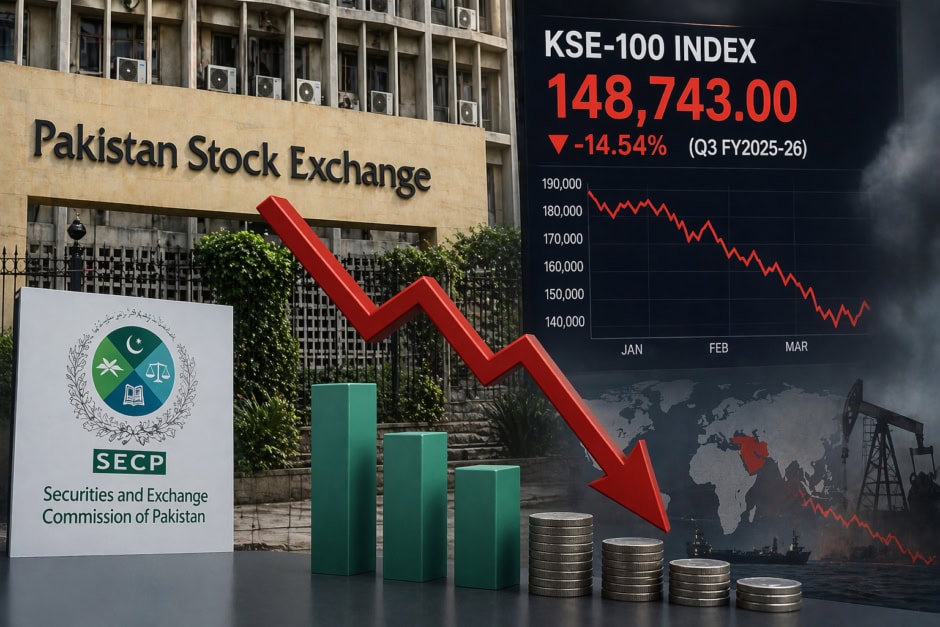
The benchmark KSE-100 Index declined 14.54 percent during the quarter, closing at 148,743 points after touching a high of 191,033 and an intra-quarter low of 144,119.
Market capitalization fell by Rs3.15 trillion to Rs16.53 trillion, though trading activity remained robust, with 48.8 billion shares traded and total traded value reaching Rs2.68 trillion.
Foreign investors recorded net outflows of Rs111.61 billion, but domestic investors largely absorbed the pressure, posting net buying of Rs111.55 billion. Corporate investors, mutual funds, and individuals all contributed to stabilizing the market.
Trading remained concentrated in major blue-chip stocks, including National Bank of Pakistan, Pakistan Petroleum Limited, Oil and Gas Development Company, and Habib Bank Limited.
The SECP also highlighted continued activity in the primary and debt markets, including three IPO approvals and oversubscribed government Ijara Sukuk auctions, which officials said reflected sustained investor confidence.
The regulator described the quarter as challenging but said strong domestic participation, active capital markets, and improving fundamentals helped Pakistan’s market remain stable despite geopolitical and economic shocks.