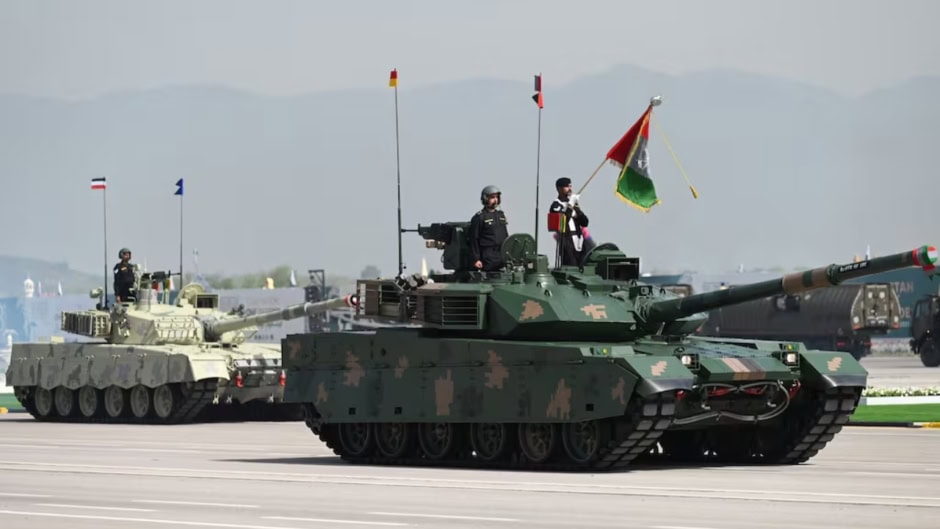
Pakistan increased its military expenditure by 11% to reach $11.9 billion in 2025. The Stockholm International Peace Research Institute (SIPRI) revealed this data in its latest global report published today.
The Impact of Regional Tensions on Military Expenditure
This surge in defense spending directly stems from the May 2025 war with India. Consequently, Pakistan aggressively procured new weapons. The armed forces placed fresh orders with China for advanced aircraft and missile systems. Furthermore, scheduled payments for older, nearing-completion defense contracts significantly boosted the overall expenditure for the year.
Similarly, India ramped up its military budget amid these heightened tensions. India now ranks as the world’s fifth-largest military spender. Its defense budget grew by 8.9% to hit $92.1 billion. During the recent conflict, India lost multiple fighter jets during confrontations with the Pakistan Air Force. Therefore, the Indian government revised its capital allocations for military aircraft upwards by 50% compared to original estimates. Meanwhile, operational and personnel costs for the Indian Air Force surged by 18%.
Global Defense Spending Trends
Globally, military budgets maintained an upward trajectory. Worldwide defense spending rose by 2.9% in real terms, reaching a massive $2.887 trillion in 2025. This marks the 11th consecutive year of growth. Over the last decade, global military expenditure has skyrocketed by 41%.
However, the actual pace of growth slowed down. In 2024, global spending surged by a massive 9.7%. Therefore, the 2025 increase represents the lowest annual growth rate since 2021.
The Economic Burden
The global military burden increased slightly. It now accounts for 2.5% of the worldwide gross domestic product (GDP), up from 2.4% last year. Military spending accounted for an average of 6.9% of total government expenditure globally. Additionally, per capita global military spending reached $352.
Notably, the United States saw a decline in its defense budget. Despite this drop from the world’s largest spender, overall global expenditure still rose. SIPRI attributes this continuous rise to sharp budget hikes in Europe, alongside sustained growth across Asia and Oceania. Excluding the US, global military spending actually expanded by a staggering 9.2% this year.