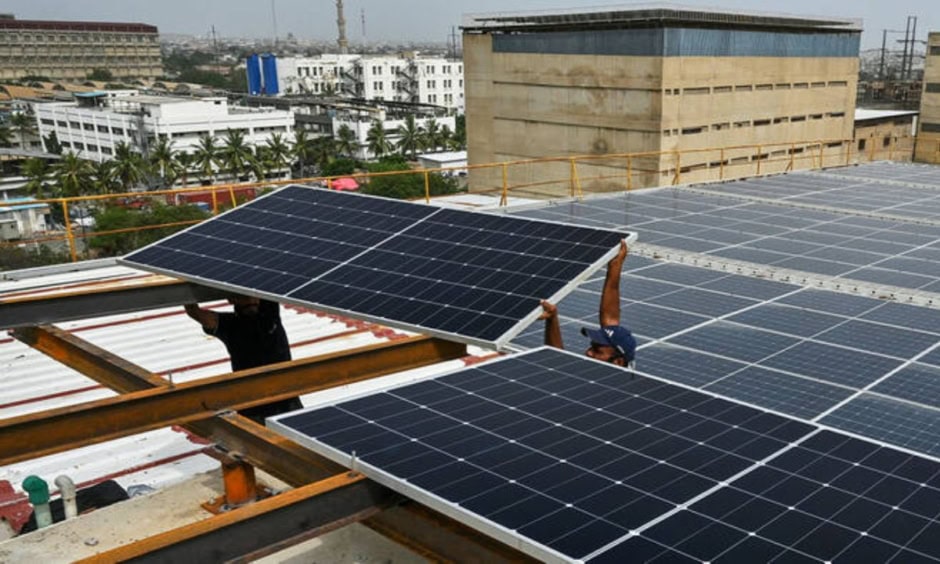
The Directorate General of Customs Valuation Karachi has announced higher customs values for imported solar panels, effective immediately ahead of the upcoming federal budget 2026‑27.
Valuation Ruling 2077 of 2026, issued Tuesday, confirmed the revision after authorities observed rising international market prices compared with the last ruling released in 2025.
Officials stated they analyzed import data, declared values, assessed values, and prevailing international prices before re‑determining customs values under Section 25A of the Customs Act, 1969.
The directorate held meetings with stakeholders, reviewed documentary evidence submitted by importers, and examined pricing and market trends during the valuation process before finalizing decisions.
Authorities considered different valuation methods under Section 25 of the Customs Act but ultimately relied on the similar goods value method after limitations emerged.
The revised values apply to Tier I solar panel manufacturers listed in Bloomberg NEF’s Global PV Market Outlook, including Jinko Solar, LONGI, Trina, JA Solar.
Other recognized Tier I manufacturers not specifically listed may qualify if importers provide sufficient documentary evidence proving the panels belong to globally acknowledged Tier I producers.
Solar panels imported in semi‑knocked‑down condition will be assessed at values 12.5 percent lower than specified customs values under the newly introduced framework.
NEPRA Retains Solar Licensing Despite Fee Waiver
Yesterday, it was reported that NEPRA decided to keep mandatory licensing for solar consumers, rejecting calls for full exemption of small-scale rooftop installations.
Households and businesses installing solar systems between one kilowatt and 25 kilowatts must still obtain a NEPRA generation licence before connecting to the national grid.
While NEPRA has waived the licence fee for systems up to 25 kilowatts, the authority to approve all licences remains exclusively with the regulator across Pakistan.
No net metering application can be processed without a valid NEPRA licence, reinforcing the central and compulsory role of regulator in all solar grid connection approvals.
All applicants must now submit requests through a dedicated online portal, which forwards applications directly to NEPRA for official licensing review and formal approval.
Applications already submitted by existing users are currently under review and are being actively processed for approval by the relevant regulatory authorities at NEPRA.