Google has found a way to build AI data centers faster than its rivals, and the answer has nothing to do with construction speed. The constraint blocking the entire industry is power. Grid interconnection queues in some US regions now run 7 to 12 years, leaving billions of dollars in planned data center capacity stranded with no electricity to run it. Google’s answer is to stop depending on the grid entirely.
In December 2025, Alphabet announced a $4.75 billion acquisition of Intersect Power, a clean energy developer with 2.2 gigawatts of solar and 2.4 gigawatt-hours of battery storage either operating or under construction. The deal closed in the first half of 2026 and marked the first time any major tech company bought a renewable energy developer outright rather than signing power purchase agreements.
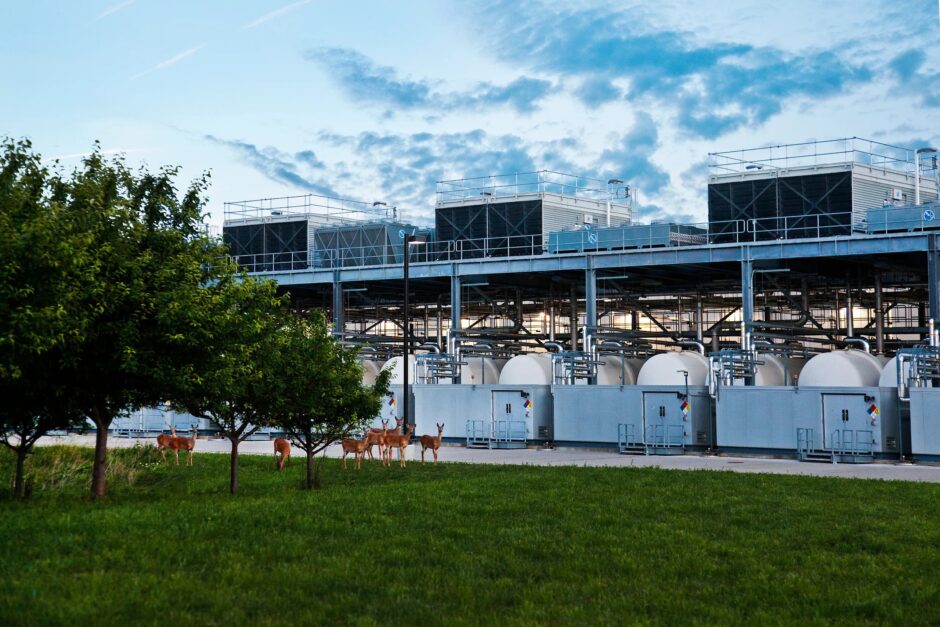
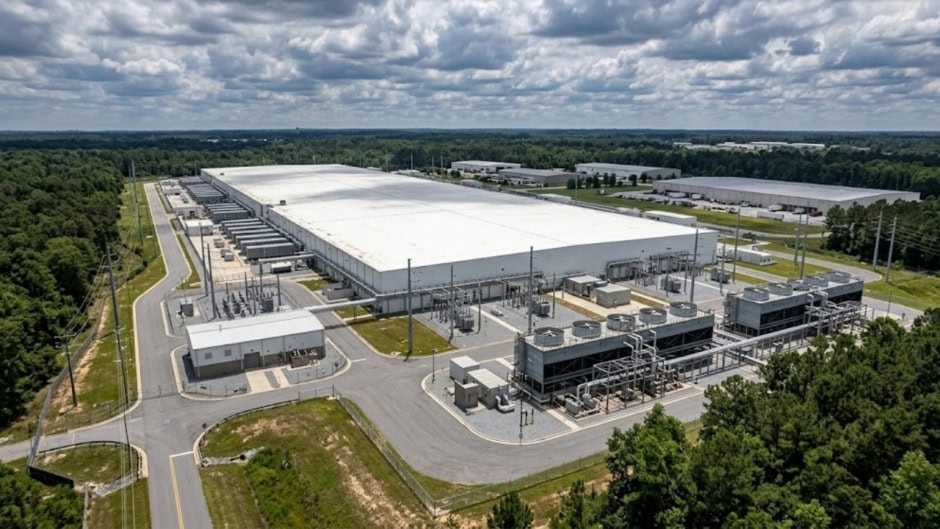
The acquisition is the foundation of Google’s “energy park” model, building data centers directly alongside dedicated solar farms, wind assets, and battery storage on the same campus, behind the meter, with no grid connection required.
The first live example is the Quantum Clean Energy Project in Haskell County, Texas. Google built a data center campus there alongside 640 megawatts of solar and 1.3 gigawatt-hours of battery storage. That project came online in spring 2026 and demonstrates the core advantage: the entire campus was developed under one plan, cutting years off the conventional timeline.
Alphabet has guided 2026 capital expenditure at $175 billion to $185 billion, up from $91 billion in 2025. The Big Four tech companies combined are expected to spend roughly $400 billion on infrastructure in 2026, with about 75% targeting AI systems.
For competitors Microsoft, Amazon, and Meta, which still largely depend on grid-connected sites and traditional power purchase agreements, Google’s vertical integration into energy generation creates a structural speed advantage that cannot easily be replicated.