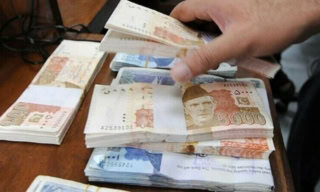
Pakistan’s agriculture and industrial development sectors are set to receive only a small portion of their requested funding under the proposed federal development budget for FY2026-27, raising concerns about investment in two key pillars of the economy.
According to budget planning documents, the Ministry of National Food Security and Research and the Ministry of Industries and Production had collectively sought approximately Rs. 117 billion for development projects. However, the proposed allocation stands at only Rs. 7.2 billion.
Of the total amount, Rs. 3.2 billion has been earmarked for the food security ministry, while Rs. 4 billion has been allocated to the industries ministry.
For the agriculture sector, budget documents show that Rs. 2.27 billion has been proposed for ongoing projects, while only Rs. 92.5 million has been allocated for new initiatives. Planned projects include commercial olive cultivation, certified potato seed production, camel milk development, and livestock disease surveillance programs.
Industry experts have expressed concerns that the relatively modest allocations could limit efforts to improve agricultural productivity and strengthen food security.
On the industrial side, the largest proposed allocation is Rs. 1.52 billion for the development of an industrial park on the land of Pakistan Steel Mills. The proposed budget also includes Rs. 50 million for the Hub Special Economic Zone.
Additional allocations include Rs. 200 million for Industrial Design and Automation Centers in Karachi, Lahore, and Sialkot, Rs. 78 million for the Sialkot Sports Goods Development Centre, and Rs. 257.2 million for projects aimed at enhancing engineering industry capacity.
The development plan further proposes Rs. 300 million for SME Facilitation Centers, another Rs. 300 million for the establishment of 1,000 industrial stitching units, and Rs. 700 million for the revival of the precious stones sector.
The proposed allocations come at a time when agriculture and manufacturing are widely viewed as critical sectors for export growth, employment generation, productivity enhancement, and long-term economic development. Final funding levels will be confirmed once the Federal Budget FY2026-27 is formally approved.