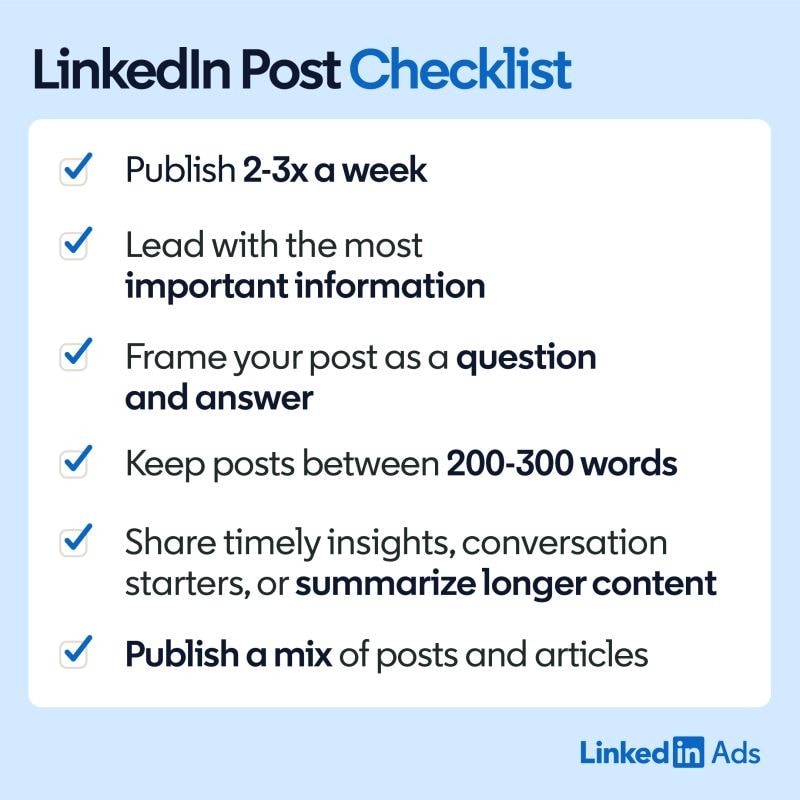
LinkedIn has finally spelled out what it wants from your posts, and the advice cuts against plenty of common habits. The platform published a checklist covering how often to post, how long updates should run, and what turns a post into a conversation. The headline instruction is straightforward, since LinkedIn recommends two to three posts every week, each ending with a question.
Consistency matters more than most people assume. As LinkedIn put it:
“Consistency is one of the biggest drivers of reach on LinkedIn. Posting regularly signals to the algorithm that you’re an active, valuable contributor.”
So the platform rewards showing up steadily, rather than posting brilliantly once a month.
Length advice will surprise anyone trained on short social copy. LinkedIn wants longer updates, not punchy one-liners, because depth holds attention and signals substance. It also urges creators to reply to comments within the first hour, then recycle their best posts into new formats later. However, there are two separate types of content that goes on LinkedIn, and the company has clearly distinguished the two now.
According to LinkedIn:
LinkedIn posts and articles serve different, yet complementary, purposes. Our data shows a significant difference in how they perform, especially with AI search.
Here’s how the two formats compare:
LinkedIn articles:
- Ideal length: 800–1,200 words
- Best for: evergreen thought leadership, detailed analysis, and building authority with frameworks
- AI performance: higher citation share due to depth and structural clarity
LinkedIn posts:
- Ideal length: 200–300 words
- Best for: timely insights, conversation starters, and summarizing key points from longer content
- AI performance: strong for engagement-driven discovery and short-answer retrieval
The more revealing part concerns artificial intelligence. LinkedIn content now ranks among the most cited sources for AI chatbots, so the platform is openly coaching users to write for machines as well as people. That shift matters, since your audience may soon be an AI summarizing you to someone else.
LinkedIn VP of Marketing Davang Shah explained that the platform builds each post’s web address from its first line, so opening with hashtags wastes that space. Lead with keywords instead, and use short paragraphs or numbered lists so machines can parse the structure.
Shah also noted that early comments shape distribution, since “Engagement signals in the first 24 hours influence how widely a post is distributed.” For long-form articles, he recommends 800 to 1,200 words, which earn higher citation rates. For Pakistani professionals building visibility abroad, that is free, actionable guidance