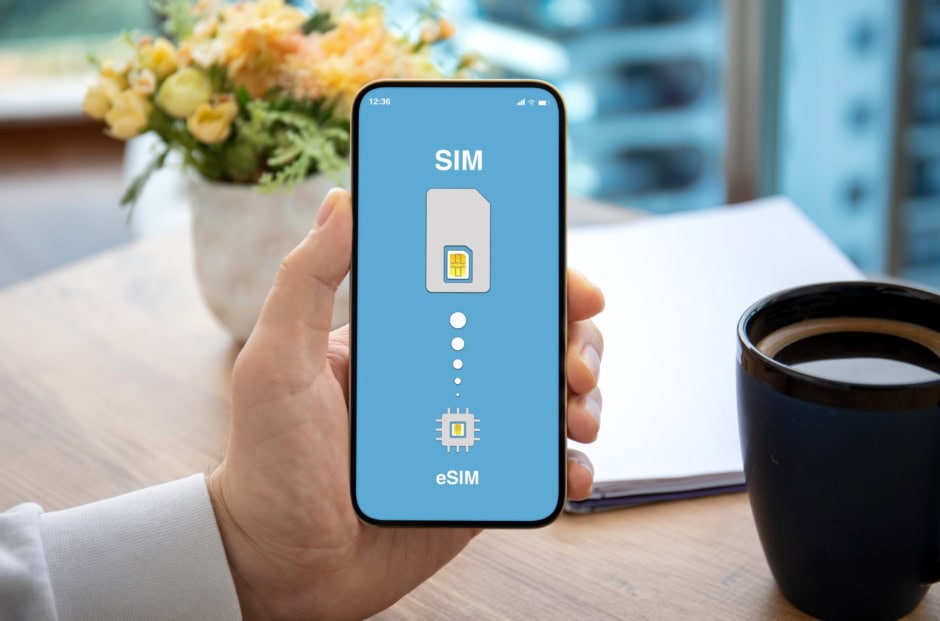
The Pakistan Telecommunication Authority (PTA) has introduced a new eSIM policy that lowers costs and makes switching devices much easier for mobile users. The regulator finalized the changes after consulting cellular mobile operators (CMOs). Under the revised policy, the maximum initial eSIM charge is now capped at Rs1,500. In addition, users can transfer their eSIMs between compatible smartphones free of charge up to 10 times. The new policy will take effect by the middle of August 2026.
The decision follows directions from a parliamentary committee, which asked the PTA to make eSIM services more consumer-friendly. The committee also wanted to reduce the need for subscribers to visit customer service centers for eSIM-related services.
According to the PTA, the current system already allows users to move an eSIM from one compatible phone to another several times. They can do this by using the same QR code provided during the original purchase and activation. As a result, no extra fee applies during those transfers.
However, after discussions with cellular operators, the regulator has now officially revised the charging structure. The maximum initial eSIM fee has been reduced to Rs1,500, while subscribers will also receive up to 10 free eSIM transfers between compatible devices. The updated policy will become operational by the middle of this month.
The parliamentary committee also instructed the PTA to build a secure digital system for eSIM transfers. This system should allow users to switch their eSIMs without visiting customer service centers. At the same time, it must maintain strong security standards.
Meanwhile, the PTA is working with the National Database and Registration Authority (NADRA) and cellular operators to improve SIM security. The regulator plans to introduce a new multi-factor subscriber verification system to strengthen SIM issuance and ownership verification.
According to the PTA, two proposals are currently under review. The first proposal allows users to obtain SIMs through NADRA’s Pak ID mobile application. The app would use facial recognition technology to verify a user’s identity remotely. This approach could reduce the need for physical biometric verification.
The second proposal focuses on self-service biometric verification through mobile applications offered by cellular operators. Under this system, subscribers could verify their identities through NADRA’s database using their operator’s app for SIM issuance and other related services.
The PTA said discussions with NADRA and cellular operators are still underway. These consultations aim to finalize the technical and operational framework for both proposals.
The parliamentary committee has also asked the PTA to include facial recognition and iris verification in the new system. In addition, the regulator must ensure that senior citizens, persons with disabilities, and other users who face challenges with traditional biometric verification receive proper support.