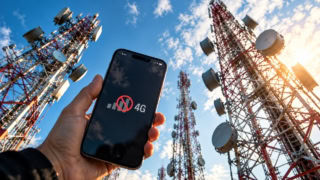
Low population density, limited commercial viability, and poor return on investment (RoI) severely hamper telecom expansion in Islamabad’s sectors I-14 and I-16. Consequently, no telecom operator currently plans immediate site expansion or technology upgrades in Sector I-16. Furthermore, they have no plans for 5G deployment there.
The Cabinet Division recently informed the National Assembly about this issue. They stated that the absence of dedicated cellular sites primarily causes weak to non-existent mobile coverage in I-16. Moreover, Ufone will only consider future expansion after completing its merger with Telenor.
Zero Dedicated Sites for Telecom Expansion in I-16
Cellular mobile operators (CMOs) have not reported any immediate expansion plans. They cite the lack of adequate commercial returns as the key constraint. This financial reality actively discourages operators from investing in new infrastructure. Sector I-14 and I-16 are newly developed areas. However, I-16 currently remains the least populated sector in Islamabad.
Despite this, the government noted a slight overall increase in infrastructure. Twelve dedicated cellular sites currently operate across the two sectors, up from the previously reported nine. Sector I-14 receives partial to adequate coverage. Specifically, Jazz operates three sites there, Zong runs three, Telenor has two, and Ufone manages one. Additionally, Zong has commenced 5G services in I-14.
On the other hand, the situation in I-16 is considerably worse. The sector has zero dedicated sites. Instead, Jazz, Zong, and Ufone extend coverage from adjoining sites located at the edge of the sector. Consequently, this arrangement results in weak coverage and poor signal quality for residents. The government clarified that all serving edge sites operate normally. Therefore, poor service stems entirely from the lack of dedicated sites, not malfunctioning infrastructure.
PTA Directs Network Optimization
Following complaints regarding distorted networks and poor signals, the Pakistan Telecommunication Authority (PTA) took action. The regulator officially took up the matter with all concerned CMOs. Furthermore, PTA directed operators to analyze coverage deficiencies. They must also undertake network optimization and explore feasible solutions to improve voice and data services in I-16.
“PTA will continue to engage all CMOs on the matter,” the government stated. However, the written response indicates that substantial coverage improvement remains difficult. Operators first need sufficient commercial justification to warrant fresh investments.
In the interim, the Minister In-charge of the Cabinet Division offered a workaround in a written reply. Residents facing weak indoor signals can use type-approved repeaters and amplifiers. Alternatively, they can use Voice over Wi-Fi (VoWiFi) to enhance indoor connectivity, subject to applicable regulatory requirements.