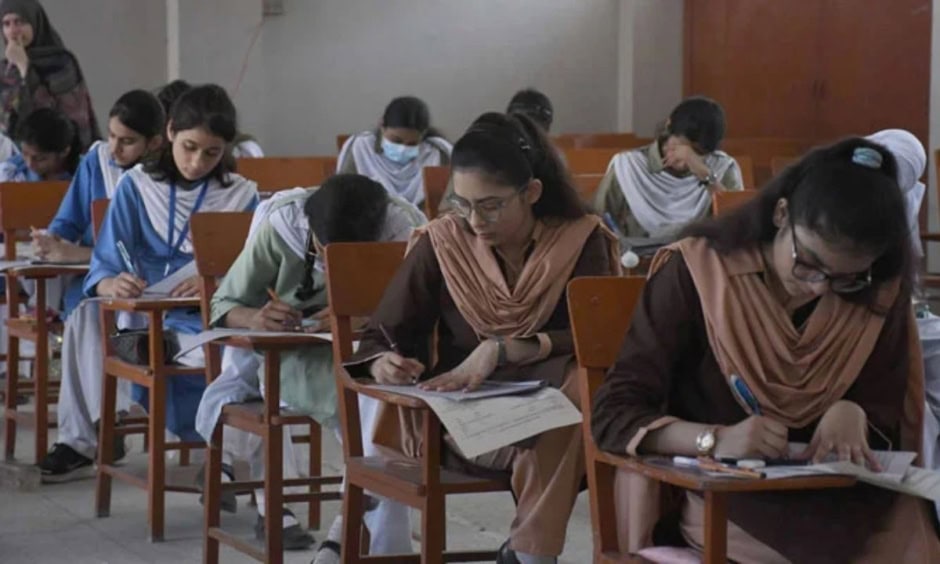
The Inter Board Committee of Chairmen (IBCC) has set the minimum passing marks at 40 percent under a new grading policy that shifts examination assessment away from rote learning towards conceptual understanding, the committee announced at its 184th forum.
The forum also approved measures to bring uniformity to examination and assessment systems nationwide.
The new grading policy has already been implemented in the Sindh, Federal and Mirpur Azad Kashmir boards, as well as the Karakoram board, the Aga Khan University Examination Board and the Ziauddin University Examination Board.
Among other decisions, matriculation and intermediate certificates will now carry B-Form or Computerised National Identity Card (CNIC) numbers.
The IBCC will also offer scholarships and overseas educational opportunities to position holders from its affiliated boards, along with winter and summer camps for outstanding students.
The forum recommended granting equivalence to certificates from 12 additional religious seminaries, raising the total number of seminaries recognised under the IBCC framework to 26.
Students from foreign examination boards who have passed two science subjects will now be granted science-group equivalence, easing previous requirements.
The IBCC further agreed to prepare a uniform calendar for theory and practical examinations across the country and to formulate common guidelines for conducting practical exams.
IBCC Executive Director Dr Ghulam Ali Mallah said emphasis had been placed on promoting e-marking to ensure transparency in the examination system.
He described the merit-based appointment of board chairpersons in Punjab as commendable and called the introduction of e-marking in Sindh’s education boards an important development.