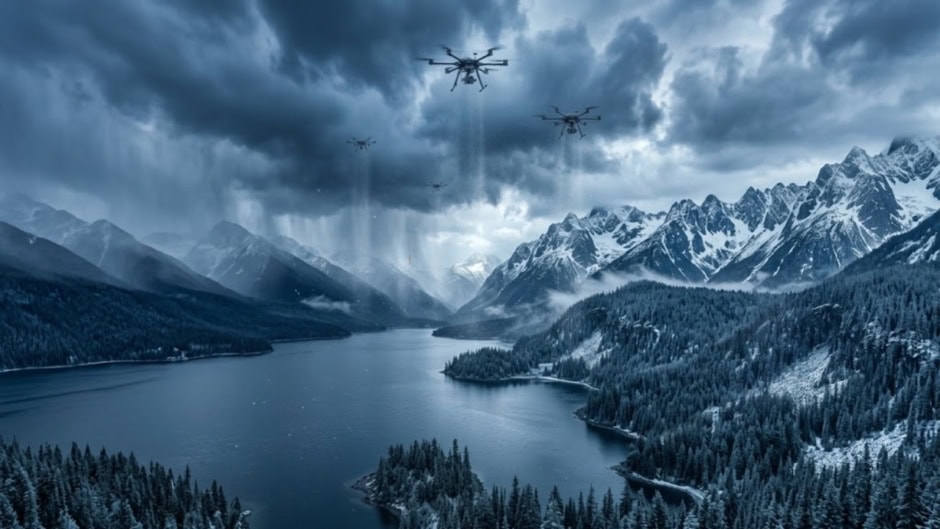
A California startup claims its drones added an estimated 19 million gallons of rain and snow over Alaska. On August 23, 2026, El Segundo-based Rainmaker Technology Corporation flew seeding missions over the Kenai Peninsula. The bold claim has since ignited a fierce debate over private weather modification.
Two autonomous drones released 19 silver iodide flares into subfreezing, moisture-rich clouds over roughly three hours. The company conducted seven coordinated seeding missions during that window. Together, these flares dispersed about 374 grams of silver iodide, less than one pound of material. Silver iodide works by encouraging ice to form inside suitable clouds.
Using radar methods adapted from earlier research campaigns, Rainmaker estimated the results carefully. The company calculated a mean of about 57 acre-feet of precipitation above background levels. That figure translates to roughly 19 million gallons of additional water. However, one crucial caveat matters enormously here.
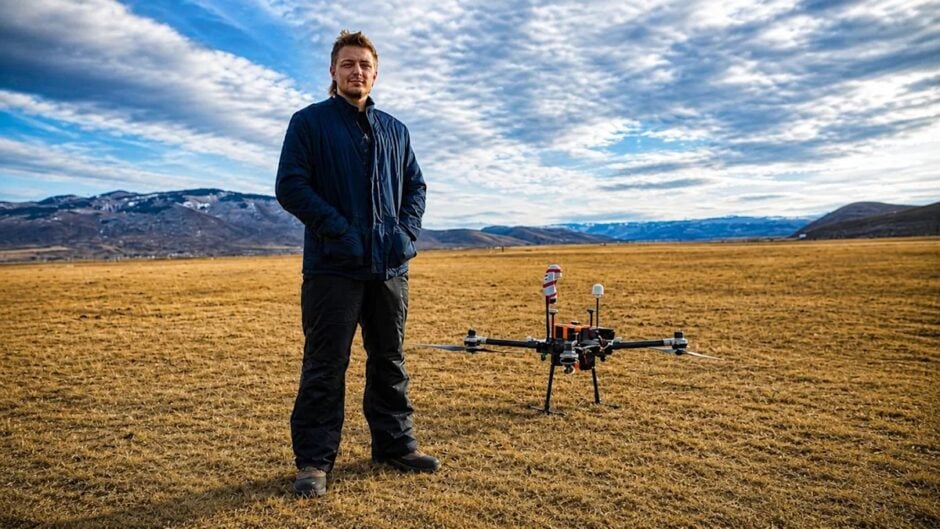
That number remains a modeled estimate, not a reading from a giant rain gauge. Rainmaker did not directly observe how much rain would have fallen naturally. Instead, researchers estimated that baseline amount and subtracted it. They then treated the calculated remainder as precipitation attributable to seeding. Consequently, the headline figure stays scientifically unverified by independent parties.
Rainmaker presents the test as a step toward larger ambitions. The company eventually wants to work on depleted basins like the Colorado River. It also hopes to boost flow into Utah’s shrinking Great Salt Lake. Founded in 2023, the startup has raised more than $50 million from investors.
However, the flights were not widely announced in advance. Alaska State Representative Sarah Vance called for an immediate halt to the activity. She said the state had received no notification about the operations. Vance has since urged authorities to order a cease-and-desist on further seeding.
Supporters treat drone seeding as a promising tool against worsening drought. Critics question private weather modification conducted without public consent or independent review. Cloud seeding itself is an old technique, nearly 80 years old. What feels new is the claim that drones can precisely target clouds. Whether this scales, and who should license it, is the argument now underway.
You can read there full report here.