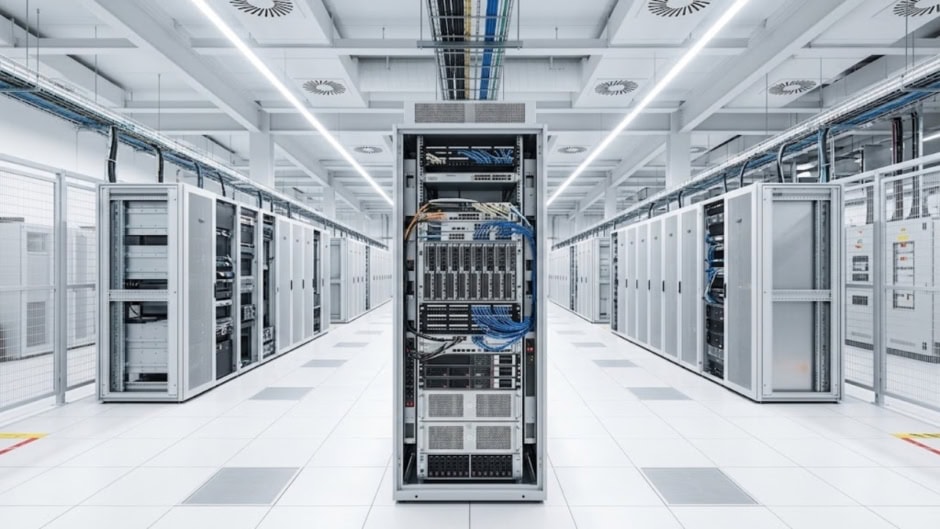
Two fusion supercomputers in the UK and US could soon join forces. The plan would link them to train the same AI models. Crucially, they would use experimental data from separate fusion machines. Ultimately, this could help engineers design future power plants faster.
The proposed system is called the SUNRISE-STELLAR-AI Federation. It would connect the UK Atomic Energy Authority’s SUNRISE supercomputer. That machine would link with Princeton Plasma Physics Laboratory’s STELLAR-AI platform. Both sides signed a Joint Declaration of Intent on September 14.
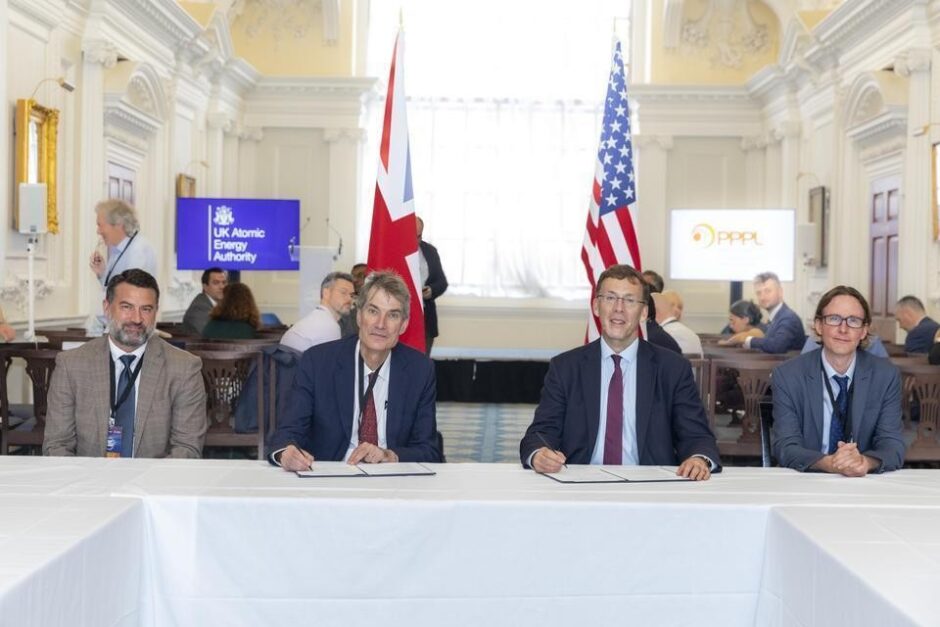
The signing happened at the Global Fusion Policy Summit in London. It followed a joint workshop held online on September 9 and 10. There, scientists turned a shared vision into a concrete plan. However, the project remains at an early exploratory stage.
Specifically, the UK data comes from the MAST Upgrade facility in Oxfordshire. Meanwhile, the US contributes data from its NSTX-U facility in New Jersey. Both are compact spherical tokamaks with notably similar designs. Consequently, that similarity makes combining their results genuinely useful.
The core benefit lies in merging two separate datasets. Models trained on just one machine often struggle elsewhere. By pooling data, researchers hope to capture more underlying physics. Therefore, the resulting models should make more reliable predictions.
The linked computers could also fill gaps in experimental data. Rob Akers, a senior fellow at UKAEA, explained this clearly. He said the labs would use simulation to extend their datasets. This lets them explore regimes they have yet to test physically.
SUNRISE itself is backed by £45 million in government funding. It anchors the UK’s first AI Growth Zone at Culham Campus. Meanwhile, STELLAR-AI is PPPL’s $13 million computing platform. Princeton University supports its ongoing operation directly.
A key goal involves building detailed digital twins of both machines. These virtual models let researchers test design changes in software. Officials framed the collaboration as essential for solving fusion. “Fusion needs partnerships,” said UKAEA’s Joe Milnes plainly.
PPPL’s Shantenu Jha outlined the technical ambition too. “Our goal is to let models and experiments move freely between the two systems,” he said. Ultimately, the federation could aid major future reactor projects.