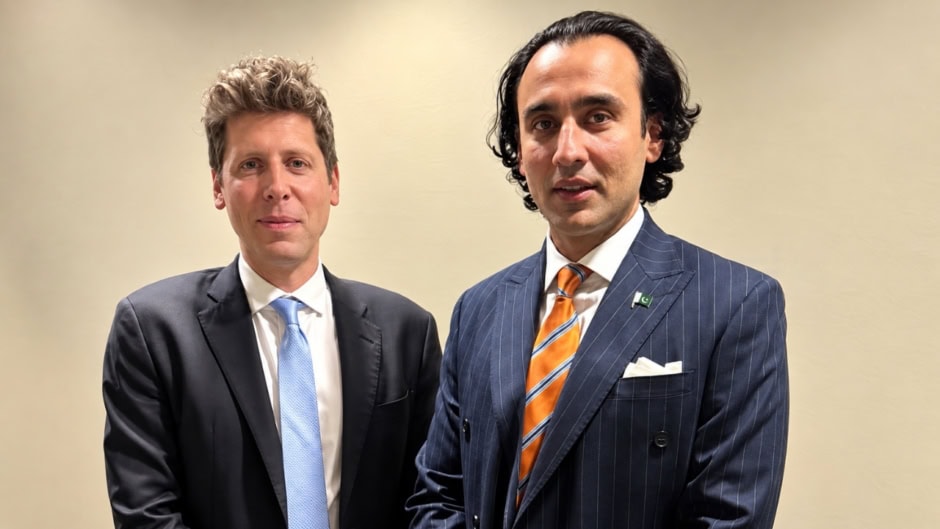
Pakistan is positioning itself as more than a consumer of artificial intelligence technology. PVARA Chairman Bilal Bin Saqib met OpenAI CEO Sam Altman at the United Nations to explore how Pakistan can help build the infrastructure and standards powering the global AI economy.
The meeting reflects a strategic pivot in how Pakistan approaches emerging technology. Rather than simply adopting tools other countries invented, Saqib emphasized that Pakistan should participate in shaping the Intelligence Age itself. Both leaders discussed Pakistan’s young talent, energy capacity, and digital infrastructure as potential assets for global AI development.
“Our ambition must be bigger than AI adoption,” Saqib wrote in a LinkedIn post describing the meeting. “Pakistan should help build the Intelligence Age.”
This approach mirrors how some countries have positioned themselves in previous technology waves by hosting data centers or software development hubs rather than waiting for foreign companies to decide where to invest.
Altman had addressed the UN Security Council a day earlier alongside other leading AI executives. That broader diplomatic engagement suggests OpenAI is actively building relationships with governments worldwide. Pakistan now has direct access to those conversations.
Pakistan has genuine advantages for AI infrastructure investment. The country boasts a massive young population with growing technical talent. Operational costs remain relatively low compared to Western alternatives. Digital infrastructure is expanding across major cities. These factors make Pakistan an attractive location for companies seeking to build AI training facilities or development centers outside the United States.
However, neither party disclosed specific commitments from the meeting. Saqib’s post remained deliberately vague about next steps, investment amounts, or timelines. This suggests both sides may have exchanged interest and explored frameworks rather than signing deals.
Pakistan’s positioning has strengthened institutionally through PVARA’s establishment. Creating a dedicated authority for virtual assets and emerging technology policy gives Pakistan a formal voice at international forums. Individual startups cannot command that level of access to global technology leaders.
Whether this UN meeting translates into actual infrastructure partnerships depends entirely on follow-up negotiations. Building AI facilities requires massive capital investment, regulatory clarity, and long-term commitments. Pakistan has shown interest, but OpenAI must see commercial viability.