
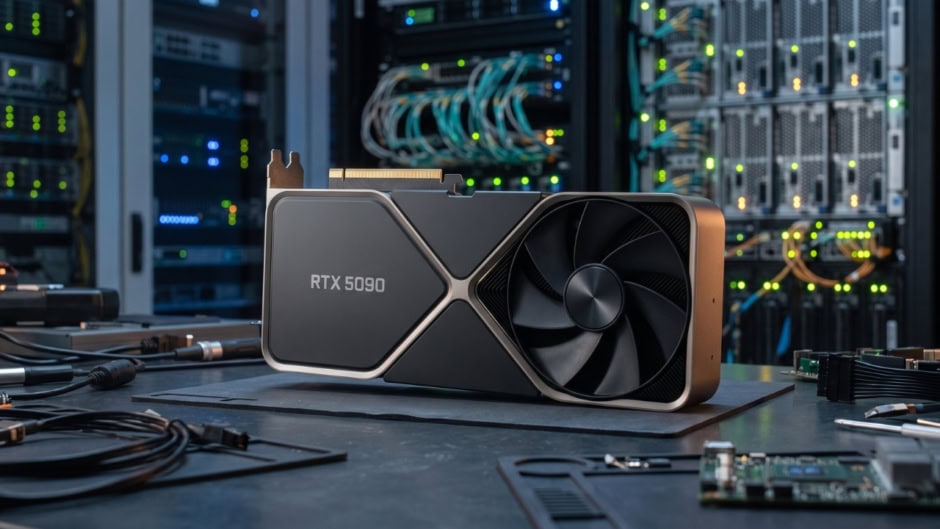
Nvidia is drastically shaking up the PC gaming market. The company is reportedly ending production of its flagship Nvidia GeForce RTX 5090 graphics card.
Credible hardware leakers recently shared an unverified factory notice. This document confirms the immediate manufacturing halt of the Nvidia GeForce RTX 5090. Consequently, Nvidia has officially labeled the RTX 5090 as “end of life” (EOL). This sudden discontinuation affects all standard RTX 5090 models. Furthermore, it kills off the ‘D’ variants explicitly designed for the Chinese market.
5090 EOL🙀,5080 24GB ready 🚀 https://t.co/FUc1igiwlD
— hongxing2020 (@hongxing2020) October 10, 2026
As of October 13, 2026, Nvidia has not publicly commented on these rumors. The company has also avoided announcing an official end-of-production date.
The AI Shift Forces Nvidia to Wave Goodbye to GeForce RTX 5090
The RTX 5090 currently reigns as the most powerful consumer GPU on the market. It features the Blackwell architecture, a 2.41 GHz boost clock, and handles 4K gaming effortlessly. However, its core component is now moving to the enterprise sector.
Moving forward, Nvidia will reserve all future supplies of the GB202 silicon exclusively for its professional RTX Pro series. The company wants to target highly lucrative enterprise visualization (ProViz) and AI data center applications.
By discontinuing the GB202 in consumer cards, Nvidia prevents its relatively affordable gaming GPUs from cannibalizing sales of its expensive professional AI accelerators. The GB202 chip also powers the enterprise-grade RTX Pro 5000 and 6000 series. For context, the fully unlocked RTX 6000 Pro features 24,064 CUDA cores and 96GB of GDDR7 memory. It currently sells for approximately $15,000.
Ultimately, this strategic pivot leaves Nvidia’s GeForce enthusiast gaming lineup entirely without an active GB202-based flagship model.
RTX 5080 24GB Will Now Become The New Gaming Flagship
Nvidia will not leave gamers entirely empty-handed. The GeForce RTX 5080 24GB will reportedly become the company’s new highest-end consumer graphics card.
Meanwhile, Nvidia will discontinue the current GeForce RTX 5080 16GB version to make room for this new 24GB variant. Rumors of a 24GB GDDR7 configuration for the RTX 5080 have circulated since September 2024. Nvidia initially delayed the release of this model in July 2026. The high cost of 3GB GDDR7 memory modules caused that specific delay.
Now, halting the production of the 32GB RTX 5090 will alleviate memory supply constraints. This decision will secure better component availability for the upcoming RTX 5080 24GB.
GPU Specifications & Status: Nvidia GeForce RTX 5090 vs. 5080
| GPU Model | CUDA Cores | Memory Configuration | TGP | Current Status |
| RTX 5090 | 21,760 | 32GB GDDR7 (512-bit) |
575W | Discontinued (Rumored) |
| RTX 5090 D | 21,760 | 32GB GDDR7 (512-bit) |
575W | Discontinued (Rumored) |
| RTX 5090 D v2 | 21,760 | 24GB GDDR7 (384-bit) |
575W | Discontinued (Rumored) |
| New RTX 5080 | TBC | 24GB GDDR7 (256-bit) |
TBC | Upcoming (Rumored) |
| RTX 5080 | 10,752 | 16GB GDDR7 (256-bit) |
360W | Active |
| RTX 5070 Ti | 8,960 | 16GB GDDR7 (256-bit) |
300W | Active |
| RTX 5060 Ti | 4,608 | 8/16GB GDDR7 (128-bit) |
180W | Active |
Component Shortages & Skyrocketing Prices
The ongoing global DRAM shortage crisis continues to devastate the hardware market. Prices of RAM, solid-state drives, and other essential components have absolutely skyrocketed.
To offset astronomical RAM costs, Nvidia already slashed its overall GPU production early in the crisis during December 2025. Scarcity and memory constraints have subsequently pushed graphics card prices aggressively upward. The RTX 5090 originally launched with a $1,999 MSRP. Today, the cheapest third-party listings on Amazon start at $7,175. The broader market is seeing prices scale as high as $9,600.
The upcoming RTX 5080 24GB could also launch with an eye-watering MSRP due to these persistent component shortages. Existing channel inventories will sustain RTX 5090 availability temporarily. However, the impending supply drought will inevitably drive retail prices even higher.
What Gamers Should Do Next
Gamers hoping for a next-generation savior will need to wait. Nvidia has delayed its next-generation Rubin-based RTX 60-series GPUs. They are not expected to arrive until late 2027 or 2028. Therefore, the PC gaming market will lack a true top-tier flagship for an extended period.
PC gamers should focus on maintaining their current hardware. Users should immediately download the latest GeForce driver (version 617.42). A simple driver update will fix lingering software issues and provide free performance boosts while the market navigates this unprecedented hardware shortage.