Apple has announced new MacBook Pro models featuring OLED displays, touchscreen support, and a redesigned look. The new lineup will be sold alongside the existing MacBook Pro range, offering buyers another option with upgraded display technology.
The biggest change is the new PROLED XDR display, which uses Tandem OLED technology previously introduced on the iPad Pro. The panels combine two OLED layers to increase brightness, reaching up to 2,000 nits of peak brightness and 1,000 nits of sustained brightness.
The displays also support variable refresh rates from 10Hz to 120Hz. In addition, they cover both the P3 and Adobe RGB color gamuts, making them suitable for tasks that require accurate colors.
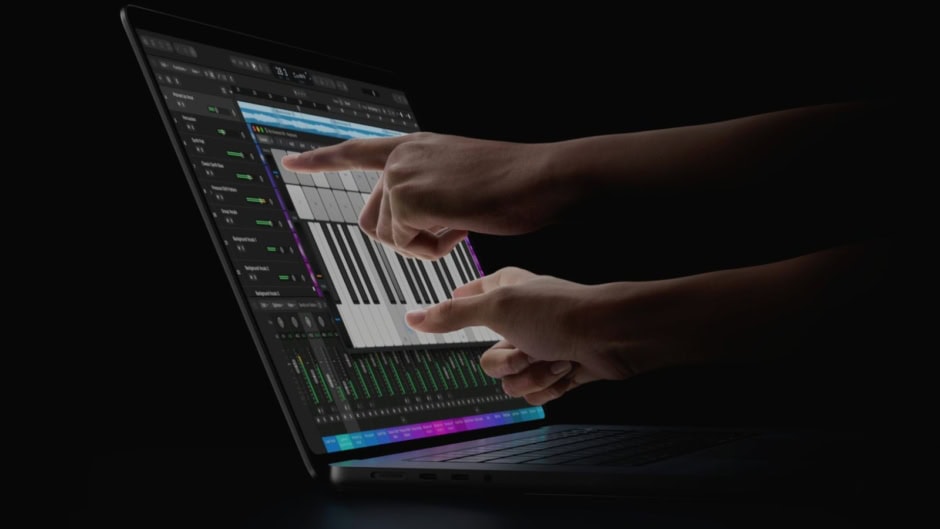
Another major addition is touchscreen support, marking the first time Apple has brought touch input to the Mac. However, macOS has not received a major redesign for touch controls. Instead, Apple presents the feature as an additional way to interact with apps and projects. Apple has not mentioned Apple Pencil support for the new models.
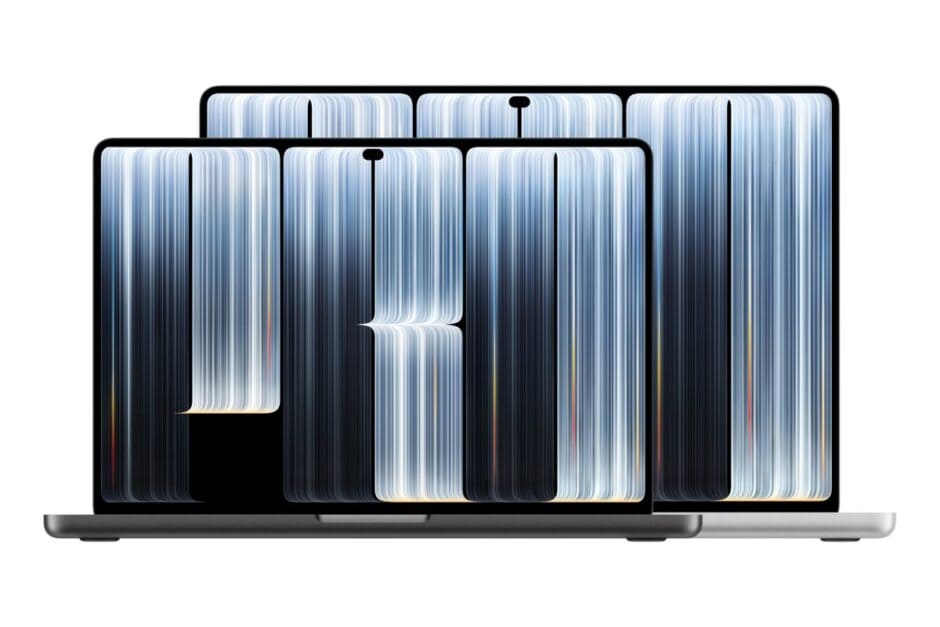
The display also replaces the traditional notch with Apple’s Dynamic Island. However, Face ID remains absent from the MacBook Pro, leaving Touch ID as the only secure authentication option.
Apple has also made small changes to the design. The new models are a few millimeters smaller in every dimension and weigh around 200-300g less, depending on the configuration. Their internal thermal design has also been revised to direct warm air away from the display.
One familiar feature is making a comeback, too. The Apple logo on the back of the lid now lights up, similar to older MacBook models. This gives the new variants a visual difference from the standard MacBook Pro lineup.
The speaker system has received several improvements as well. The new models retain the six-speaker setup but feature updated woofers that deliver 50% deeper bass, along with new tweeters. Apple has also redesigned the system to maintain sound quality when the lid is closed.
Beyond these changes, the new MacBook Pro models share most of their hardware with the existing range. They use the same M5 Pro and M5 Max chips and retain the current memory and storage options. Connectivity features and battery life also remain unchanged.

As a result, the main differences come down to the OLED display, touchscreen support, updated design, and improved audio system. Buyers will need to decide whether these upgrades justify the higher price compared with the standard models.
The 14-inch MacBook Pro with the M5 Pro starts at $2,899, while the 16-inch version starts at $3,399. Models with the M5 Max are priced at $4,499 for the 14-inch version and $4,799 for the 16-inch model. Pre-orders are open today, and the new MacBook Pro models will go on sale on November 6.