Researchers at Argonne National Laboratory adapted the transformer architecture powering ChatGPT and other generative AI systems for an entirely different purpose: simulating how fluids move and transfer heat inside advanced nuclear reactors. The work could dramatically accelerate reactor safety analysis while maintaining the accuracy that nuclear engineering demands.
The team integrated transformer models into Argonne’s System Analysis Module (SAM), a simulation tool used to study advanced reactor designs. Traditional turbulence modeling requires enormous computing resources because fluid behavior inside reactors is chaotic and unpredictable. Detailed simulations that capture this complexity can take days or weeks to run. Simpler models run faster but sacrifice accuracy in ways that matter for safety-critical engineering.
The architecture analyzes relationships between physical data points including locations, velocities, and fluid flows across an entire reactor system simultaneously.
Rui Hu, principal nuclear engineer and manager of the Safety and Engineering Analysis Department in Argonne’s Nuclear Science and Engineering Division, framed the breakthrough directly.
“With AI, we can be as accurate as the complex methods and as fast as the simple methods. It is a union of accuracy and speed.”
The model has already demonstrated high accuracy in representing resistance to fluid flow and heat transfer, two properties critical for reliable reactor simulation. According to Argonne, AI-based models can now produce simulation results almost instantaneously while matching the accuracy of computationally expensive methods that previously required significant time and hardware.
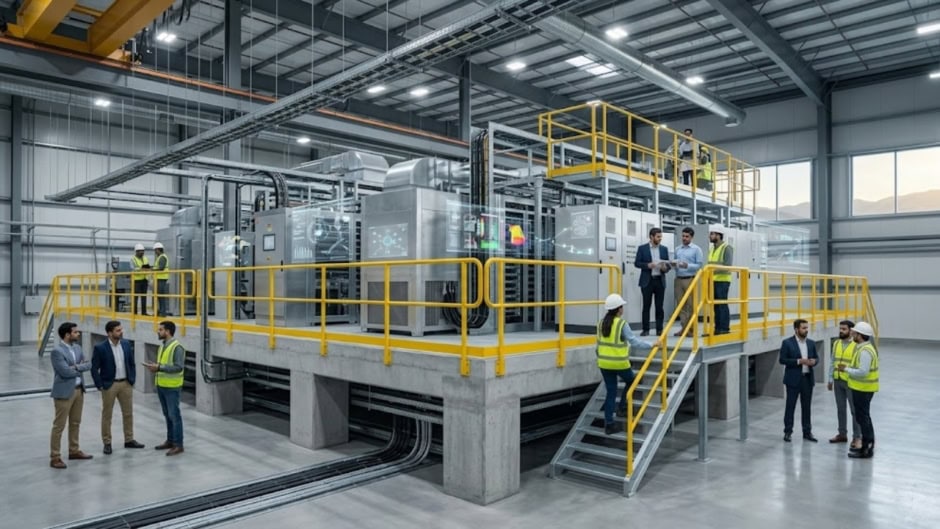
The next phase targets digital twins of entire nuclear power plants. These virtual representations would model not just the reactor core but cooling systems, safety mechanisms, auxiliary equipment, and supporting infrastructure operating together in real time. Argonne researchers say they are among the first teams exploring transformer architectures for digital twin technology in nuclear systems.
Faster simulations mean engineers can test more design variations, evaluate safety scenarios more thoroughly, and identify potential issues before they manifest in physical systems. For nations developing nuclear energy programs, including Pakistan’s ongoing discussions around small modular reactors and nuclear capacity expansion, AI-accelerated simulation tools could reduce development timelines and lower the cost of reactor safety validation significantly.
The project receives funding from the US Department of Energy’s Nuclear Energy Advanced Modeling and Simulation (NEAMS) Program.