GitHub has officially introduced a new npm package firewall designed to block supply chain attacks before malicious code reaches developer environments. Launched in public preview for GitHub Enterprise Cloud customers, the tool acts as an install-time policy gate that sits between internal registries or local endpoints and upstream package repositories.
The security feature addresses an escalating wave of malware campaigns that exploit systems during package installation. Automated CI runners and artificial intelligence coding agents face heightened exposure to these threats because they frequently pull and install dependencies without human oversight. By inspecting both metadata requests and package downloads for signs of malicious activity, the firewall intercepts threats before execution.
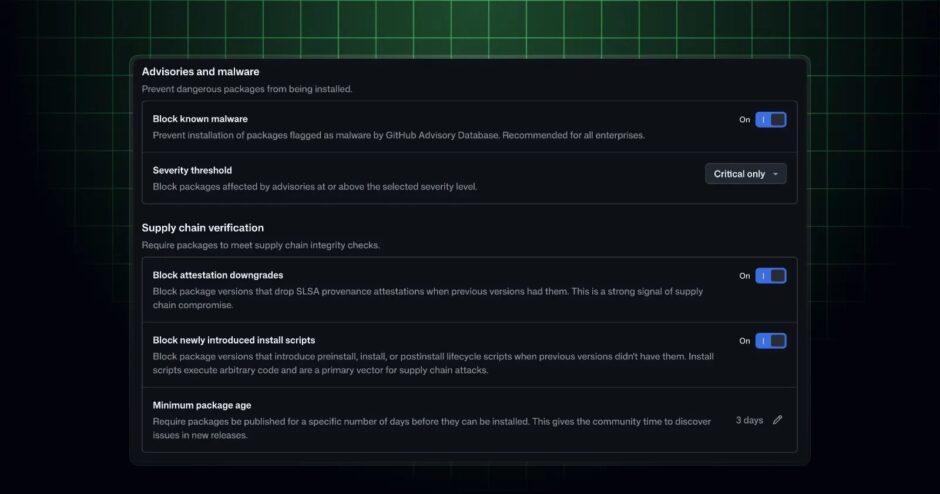
Administrators can configure customized enterprise policies, including mandatory soak times or cool-down periods for newly published package versions. If a legitimate package gets blocked erroneously, developers can request standard exceptions through an integrated workflow. Furthermore, the system evaluates package lists and downloads against strict threat intelligence feeds to stop known malware and critical vulnerabilities proactively.
As modern development pipelines increasingly rely on autonomous agents and rapid cloud builds, proactive perimeter defenses have become essential. By catching compromised dependencies at the moment of installation, the npm package firewall provides an invaluable layer of defense for modern engineering teams worldwide.