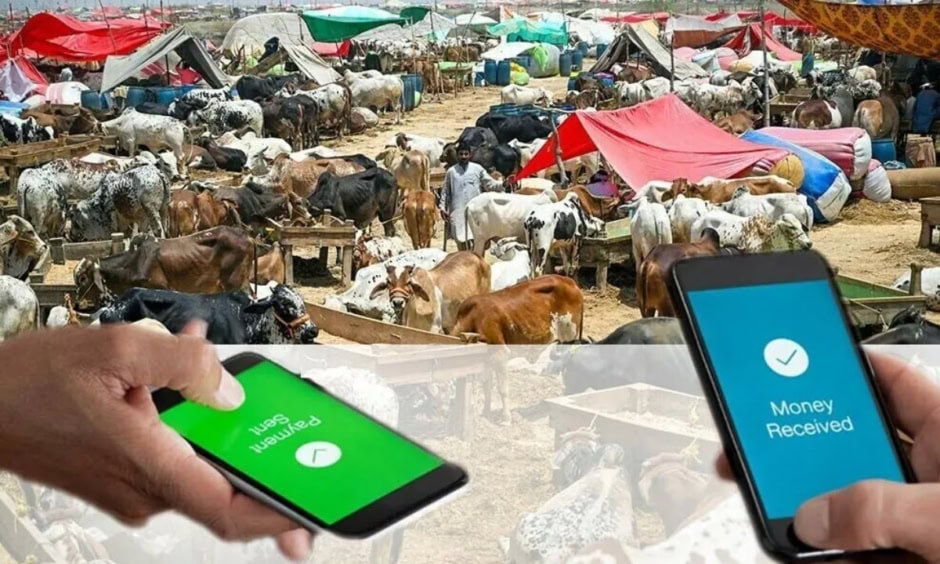
The federal government introduced online payment facilities for sacrificial animal trade during Eidul Adha, but a large share of transactions was still completed entirely in cash.
The State Bank of Pakistan (SBP) deployed mobile ATM vans near cattle markets and enabled online cash services, helping direct a notable portion of transactions through formal banking channels.
Approximately Rs650 million to Rs700 million in transactions takes place during Eidul Adha itself, while a further Rs700 million enters market circulation in the days before it.
The combined estimated value of animal trade and sacrifice during the festival is placed at Rs641 million, based on figures provided by State Bank of Pakistan sources.
The supply chain behind Eidul Adha involves livestock farmers, traders, transporters, market operators, fodder sellers, butchers, and workers connected to the broader leather processing industry.
Each link in this chain receives income during the festival season, making Eidul Adha a critical economic event for millions of people across rural and urban Pakistan.
An estimated 7.4 million animals including cows, buffaloes, goats, sheep, and camels are sacrificed across Pakistan over the three days of Eidul Azha each year.
More than 532,000 tonnes of meat is distributed during this period, making it the largest private informal food distribution system currently operating anywhere in the country.
Over Rs400 million in income is transferred from urban to rural areas during Eid days, representing the single largest seasonal income source for livestock farmers and rural households.
Butchers earn substantial fees for each animal processed during the season, while hides from sacrificed animals supply raw material directly into Pakistan’s established leather manufacturing industry.