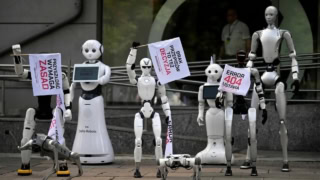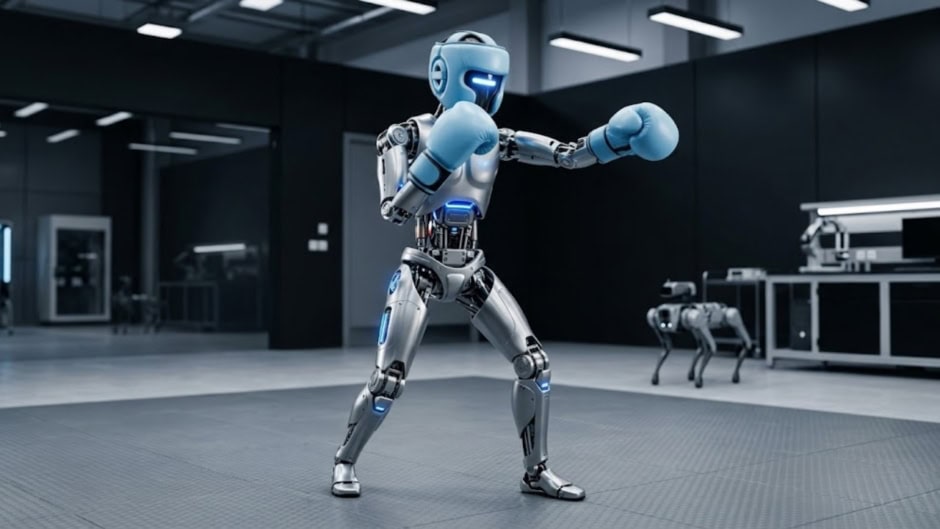
Japan, the longtime pioneer of robotics dating back to the 1960s, has fallen behind China in the AI-driven humanoid robot boom currently reshaping global manufacturing. While humanoid robots from China and the US capture public imagination through tasks like serving drinks, boxing, and dancing, Japan’s counterparts remain mostly confined to factory floors.
At the 26th International Robot Exhibition held in Tokyo in December, Japan’s industrial heavyweights including Kawasaki, Fanuc, Yaskawa, and Nachi still occupied the largest booths. They were showcasing robotic arms performing welding and assembly. Japanese companies still remain highly competitive in traditional robotics, accounting for 38% of global production, but that legacy strength has made strategic pivots toward AI-driven humanoids more difficult.
However, the shift is also difficult to hide in numbers. According to the International Federation of Robotics’ World Robotics 2025 report, the global operational stock of industrial robots reached 4,664,000 units in 2024, up 9% year over year. Moreover, 542,000 new installations mark the fourth consecutive year above 500,000 units.
China installed 295,000 of those robots, representing 54% of global deployments and the highest annual total on record. China’s operational robot stock exceeded 2 million units in 2024, the largest of any country, and Chinese manufacturers sold more domestically than foreign suppliers for the first time, with their home market share climbing to 57% from roughly 28% a decade earlier.
On robot density, the metric IFR President Takayuki Ito calls the most reliable cross-country comparison, China recorded 470 robots per 10,000 employees in 2024, overtaking both Germany at 449 and Japan at 446 to claim third place globally behind South Korea and Singapore. China only entered the global top 10 in 2019 and doubled its density within four years.
The humanoid segment shows the gap even more starkly. Counterpoint data shows 16,000 humanoid robot units were deployed worldwide in 2025, with China accounting for more than 80%. AGIBOT led all vendors with a 31.9% share, followed by fellow Chinese manufacturers Unitree, UBTECH, and Leju, while Tesla ranked fifth globally with nearly 5% share.
China’s Made in China 2025 industrial blueprint, unveiled in 2015, explicitly named robotics as a strategic priority, and analysts at Mizhuo Bank attribute China’s edge to a deep AI talent pool and vast domestic market offering abundant real-world training data, a combination Japan’s manufacturing-centered university system has struggled to replicate.