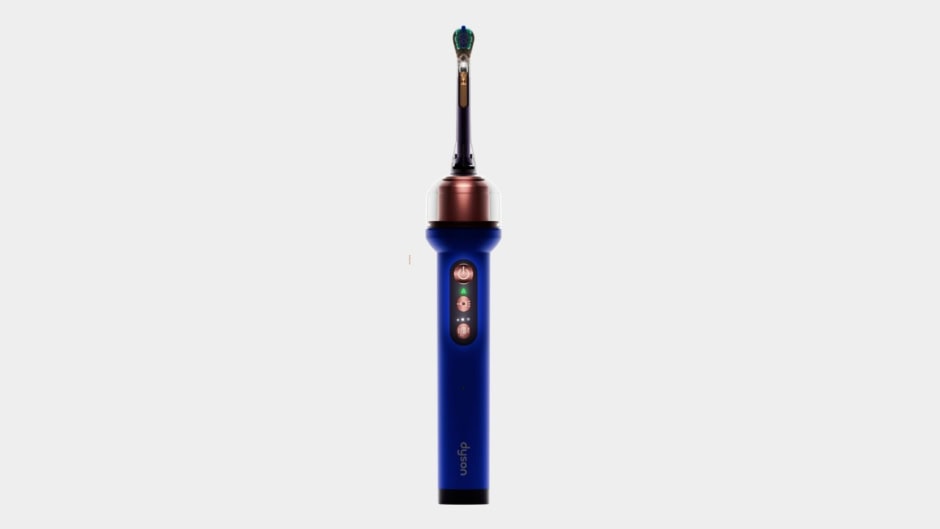
Dyson just placed a camera inside a toothbrush, and it costs $499. The new CameraJet, launched September 1, uses a 100,000-pixel macro lens to spot gaps between your teeth. It then fires a precise burst of mouthrinse exactly where plaque hides. On paper, it is an engineering marvel that took six years and 38 patents to build.
The technology itself works impressively. The camera analyzes 28 images per second while you brush. Within 100 milliseconds of spotting a gap, the device jets mouthrinse into it. Dyson claims laboratory testing showed nearly 70% more plaque removal in hard-to-reach areas. Users can even watch a live feed of their own teeth through the MyDyson app.
“Flossing is an awkward and time-consuming chore. Few of us do it even though we know we should. Dyson engineers and scientists have spent well over a decade understanding oral care regimes and how nasties build up in the mouth. Our research has shown that people consistently miss the areas where plaque forms: the gaps between teeth.
We wanted to solve three fundamental problems: how to see those gaps, remove plaque, how to improve cleaning performance while brushing.
By combining a camera, machine learning, precision fluid dynamics, advanced brushing technologies, connectivity and WiFi, Dyson CameraJet™ introduces an entirely new way to keep your mouth healthy.”
— James Dyson, Founder and Chief Engineer
However, the CameraJet arrives at a curious cultural moment. Reactions online have been mixed, blending genuine excitement with unmistakable unease. While the price draws plenty of jokes, a quieter concern keeps surfacing across social platforms. People increasingly ask a simple question: why does everything now need a camera?
That question extends far beyond the bathroom sink. Consider the Oura ring for example, which tracks sleep, heart rate, and body temperature around the clock. Consider Flock Safety cameras, which now blanket roads across many US states, scanning license plates automatically. Each device promises convenience or safety. Yet together, they represent something larger and harder to ignore.
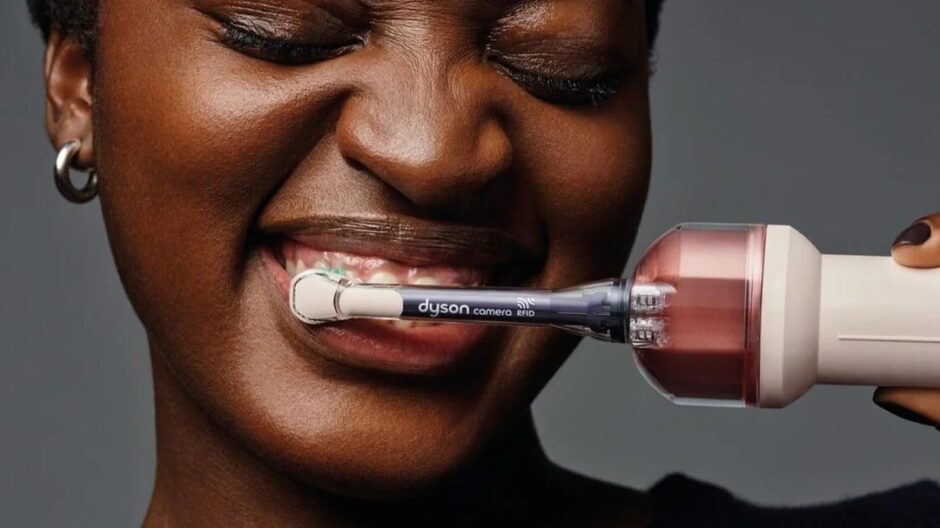
We are steadily inviting sensors into the most intimate corners of daily life. A ring monitors your body while you sleep. A street camera logs your movements without asking. Now a toothbrush films inside your mouth every morning. While individually it might feel harmless and even helpful, collectively, it feels a new wave of normalizing constant observation as the price of modern living.
Naturally, the internet did not take this new gadget lightly.
Comment
by
u/Huge-Stress999 from discussion
in
gadgets
Comment
by
u/Huge-Stress999 from discussion
in
gadgets
To its credit, Dyson insists the CameraJet processes images on the device itself. The company says footage is neither stored nor shared, and is captured only when prompted. Those are meaningful safeguards worth acknowledging. Still, the broader pattern remains striking regardless of any single product’s protections.
Perhaps the most interesting detail is not the technology at all. It is how little resistance these devices now face. A camera in your mouth once sounded absurd. Today it launches as a premium wellness product. That shift, more than the toothbrush itself, is what deserves our attention.