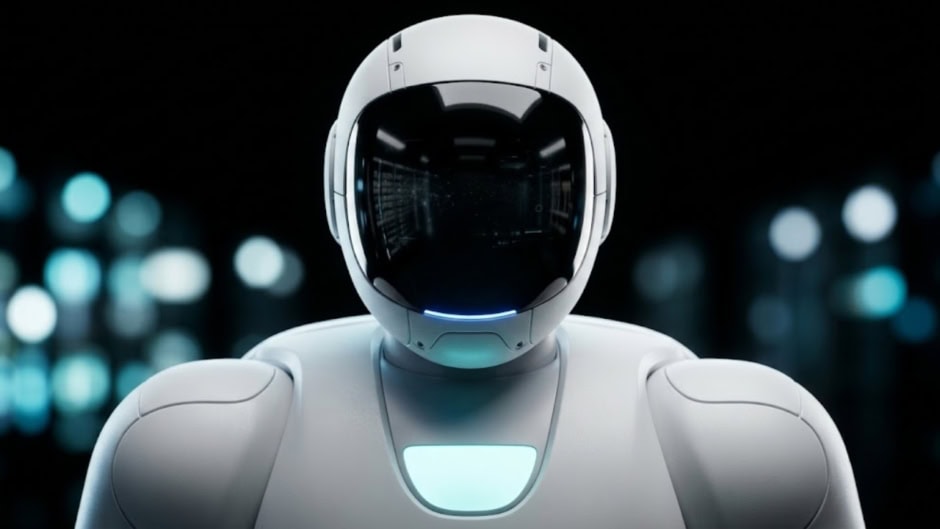
The United States Federal Communications Commission (USFCC) blacklisted all foreign-produced robots and connected power inverters on July 28, preventing new models from receiving US market authorization. The sweeping ban targets humanoid robots, quadrupeds, and grid-connected electrical equipment that a White House-convened interagency body determined pose “unacceptable risk to national security.”
Manufacturers can appeal through a Conditional Approval process with the Department of War or Homeland Security, though approval typically requires commitments to shift production onto US soil. The restriction applies only to new models going forward. Existing authorized equipment remains available for purchase and use, and the FCC issued a temporary waiver covering software and firmware updates through January 2029.
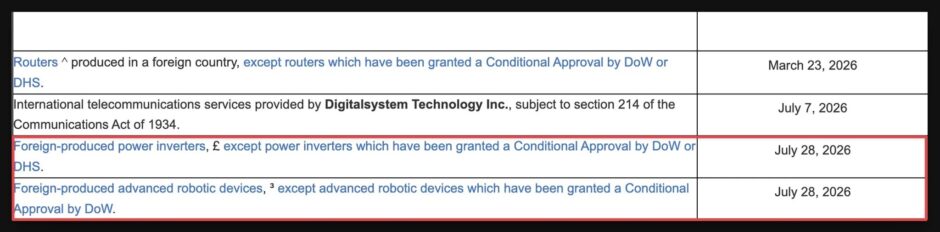
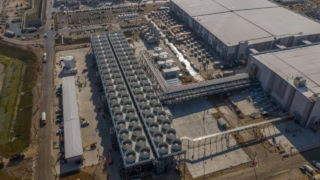
The power inverter restriction carries particular weight because it strikes directly at AI infrastructure expansion. Internet-connected inverters enable remote grid manipulation and have been flagged as vulnerabilities in critical energy systems.
The FCC cited concerns that foreign control of inverter technology could allow adversaries to destabilize power infrastructure. Solar and battery storage systems depend heavily on foreign-manufactured inverters, creating immediate bottlenecks for renewable energy expansion at a time when US data centers are scaling AI operations at unprecedented rates.
“I welcome these Executive Branch national security determinations, and I am pleased that the FCC has now added foreign produced advanced robotics and power inverters to the FCC’s Covered List,” FCC Chairman Brendan Carr said in a statement. “Following President Trump’s leadership, the FCC will continue to do our part to secure America’s critical supply chains and, with today’s action, the FCC is acting in lock step with our national security agencies to do just that.”
Beijing responded within 24 hours. China’s Foreign Ministry spokesperson Mao Ning warned that China would take measures to protect its companies’ interests.
“Protectionism does not make the US more competitive, and it will only hurt the interests of US companies and consumers,” Mao Ning told reporters at a regular press conference Wednesday in Beijing.
The response carries real economic weight: Huawei and Sungrow together control roughly 55% of global power inverter market share, meaning US renewable energy projects now face serious sourcing challenges that could slow deployment timelines.
This action joins a growing pattern of FCC blacklists targeting foreign-produced technology. The commission restricted drones in December 2025 and routers in March 2026. Chinese drone-maker DJI filed suit challenging its designation, and that case remains pending before the Ninth Circuit.
Each addition compounds supply chain pressure on industries dependent on Chinese components, signaling that US-China technology decoupling is accelerating across critical infrastructure categories simultaneously.