
Google has introduced a new privacy-focused update for its Android browser, Google Chrome. The update adds support for approximate location sharing, which changes how websites access user location data.
Until now, Chrome on Android has mainly relied on precise location sharing. This meant websites could request highly accurate location data from the device. For many everyday websites, this level of detail was more than necessary.
With the new update, users can now choose to share only an approximate location. This means websites will receive a general area instead of exact coordinates. This change gives users more control over their privacy while browsing.
Google has designed this feature to reduce unnecessary exposure of personal location data. Many websites only need a rough idea of where a user is located. For example, weather updates or local news do not require exact positioning.
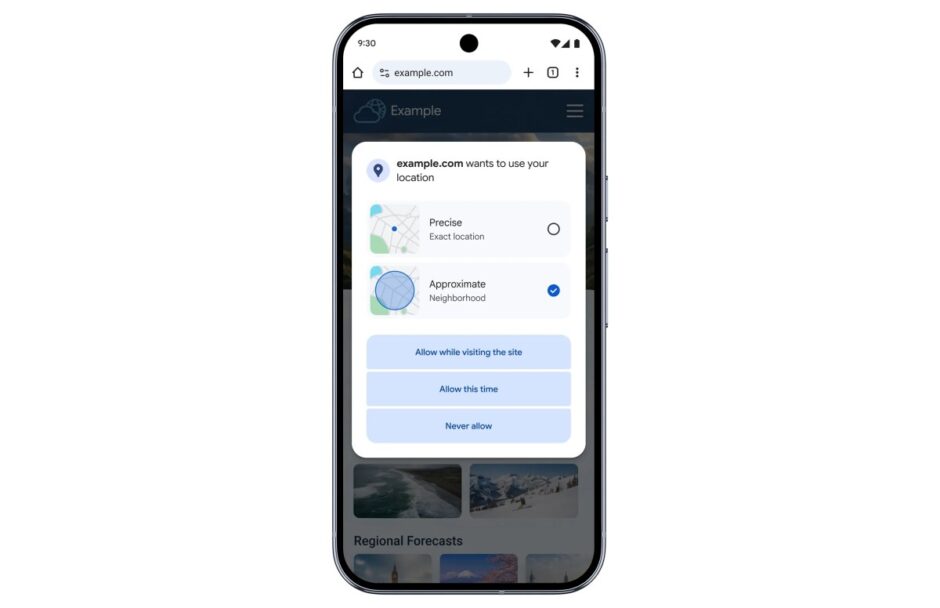
At the same time, precise location access is still available. Users can continue to allow exact location sharing when it is needed. Nothing is being removed from the system, and users remain in control of their settings.
Google is also working on a new API for web developers. This API will allow websites to directly request either approximate or precise location data. Developers will be able to choose which type of location is required for their services.
This change is expected to improve transparency between users and websites. Instead of relying on broad permission requests, websites will be able to clearly state what level of location accuracy they need.
The update also reflects a wider shift in how browsers handle privacy. More control is being placed in the hands of users. At the same time, developers are given clearer tools to build location-based features.