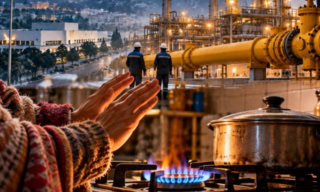
The government has committed to the International Monetary Fund to phase out the existing Rs. 140 billion gas subsidy for protected and certain non-protected consumers as part of broader energy sector reforms.
Under the new plan, the current consumption-based subsidy system will be replaced with targeted financial assistance linked to household income through the Benazir Income Support Programme.
According to reports, the transition to the revised gas tariff structure must be completed by January 2027 under a structural benchmark agreed with the IMF.
Under the proposed mechanism, consumers will no longer receive subsidized gas through lower slab rates. Instead, all domestic and commercial consumers are expected to pay the full average gas tariff, while eligible low-income households will receive direct financial support through BISP based on income data rather than gas consumption levels.
Officials said the reforms are aimed at reducing distortions in gas pricing and improving efficiency within Pakistan’s energy sector.
Currently, the Rs. 140 billion subsidy is financed through cross-subsidies imposed on industrial and commercial consumers, including captive power plants operated by export industries, cement manufacturers, CNG stations, commercial users, and high-end domestic consumers.
The average gas tariff currently stands at around Rs. 1,750 per MMBtu.
Authorities clarified that the federal government does not directly finance the subsidy through the national budget. Instead, the relief provided to lower-income consumers is currently funded through higher tariffs charged to industrial and commercial sectors.
Once the new framework is implemented, all consumer categories are expected to pay the same average gas tariff, effectively ending the long-standing cross-subsidy arrangement in the gas sector.