Khyber Pakhtunkhwa government has launched a project to introduce AI-generated virtual clones of teachers in classrooms, using digital replicas of real educators faces and voices to deliver lessons in schools facing chronic staff shortages.
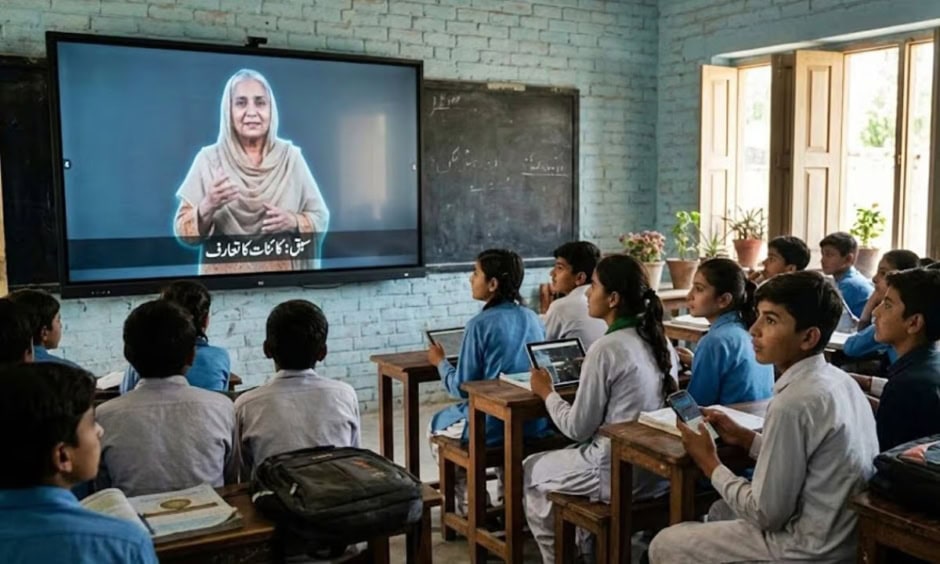
The Parho Khyber Pakhtunkhwa initiative will use these AI teacher clones to cover 2,900 curriculum modules for grades six through twelve, including subjects such as physics, maths and Urdu. A virtual clone of a well known Peshawar teacher, who has reportedly taught at Cambridge and government institutions, has already been developed and used to deliver classes.
Students will not simply watch prerecorded videos. Officials say they will be able to ask questions directly to the virtual teachers and receive live responses, transmitted from a virtual school set up in Gulbahar, Peshawar. Selected pilot schools have been fitted with screens, cameras, microphones, internet connections and sound systems to receive these live sessions.
The technology is being introduced mainly to address teacher shortages in remote regions including Bajaur, South Waziristan, North Waziristan and Bannu, where science teachers are especially scarce. In these virtual model schools, a technical staff member will reportedly be present in place of a conventional classroom teacher, a claim that has become one of the most contested parts of the project.
The Young Teachers Association Khyber Pakhtunkhwa has raised concerns over the feasibility of the plan, pointing out that many areas lack reliable basic network connectivity, which raises questions about how virtual classrooms will function. The association also questioned government claims that the AI system can operate offline, asking how it could work without access to online data.
The project was approved at a high level meeting on digital education reforms chaired by Khyber Pakhtunkhwa Chief Minister Muhammad Sohail Afridi, who has set a target of raising the provinces literacy rate by 30 to 35 percent within two years. The government says the initiative requires a one-time investment of Rs5 billion and could generate annual savings of more than Rs100 billion.