Researchers at the University of California San Diego have used supercomputer simulations and artificial intelligence to improve sodium-ion battery materials, potentially lowering costs for large-scale energy storage systems needed to support renewable energy grids.
The research team utilized the Expanse supercomputer at the San Diego Supercomputer Center to study how small material changes inside battery cathodes could boost energy storage capacity and extend battery lifespan. The work addresses key performance gaps that have prevented sodium batteries from competing effectively with lithium-based systems.
Sodium-ion batteries are considered a lower-cost alternative to lithium-ion cells because sodium is abundant and widely available, making them attractive for storing renewable energy from solar and wind farms where cost is a major consideration. However, sodium batteries have struggled with lower performance and faster degradation than lithium-based batteries, particularly under high-voltage operation.
To address these limitations, scientists modified an existing sodium-based cathode material by adding small amounts of lithium and titanium. The subtle changes proved significant, as the modified material could store more energy and remained stable even when the battery was pushed to higher voltages, a key requirement for extracting more energy from each charge.
Professor Shirley Meng of UC San Diego explained that in laboratory tests, the improved cathode held significantly more charge and retained most of its capacity after many cycles, even under demanding high-voltage conditions that usually cause sodium materials to break down quickly.
The challenge for researchers was understanding exactly why those minor chemical changes had such a large impact on performance. The team used computing allocations through the US National Science Foundation ACCESS program to run large-scale simulations of sodium-ion movement through the material’s crystal structure during charging and discharging cycles.
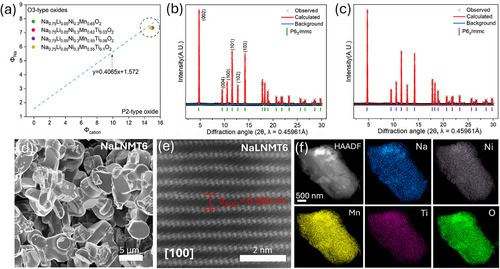
The simulations relied on AI models known as foundation potentials, which can perform atom-level calculations faster and at lower cost than traditional computational methods. The digital modeling showed that lithium and titanium helped sodium ions move more freely while preventing the crystal framework from collapsing during repeated use.
“By narrowing down promising designs on Expanse before heading into the lab, we were able to move much faster than if we had relied on trial and error alone,” said Shyue Ping Ong, a UC San Diego professor and collaborator on the project.
The work highlights how supercomputers are becoming essential tools in battery development. Instead of relying solely on laboratory experiments, scientists can now simulate thousands of possible material combinations before building prototypes, potentially shortening development timelines for next-generation batteries used in grid backup systems, renewable power storage, and future electric vehicles.
The findings point to a practical pathway for improving sodium-ion batteries, making it more feasible to build large battery farms that store renewable energy and release it when the sun is not shining or the wind is not blowing. Such storage systems are critical for increasing renewable energy adoption and maintaining grid stability as countries transition away from fossil fuels.
Sodium-ion batteries offer several advantages beyond lower material costs. Sodium is geographically distributed more evenly than lithium, reducing supply chain vulnerabilities and geopolitical dependencies. The technology could prove especially valuable in regions where lithium access is limited or expensive.
The research demonstrates the growing role of computational materials science in accelerating clean energy technologies. By combining supercomputing power with AI-enhanced modeling techniques, researchers can explore vast chemical design spaces that would be impractical to investigate through physical experimentation alone.
The findings were published in Advanced Energy Materials, a peer-reviewed scientific journal focusing on energy conversion and storage technologies.