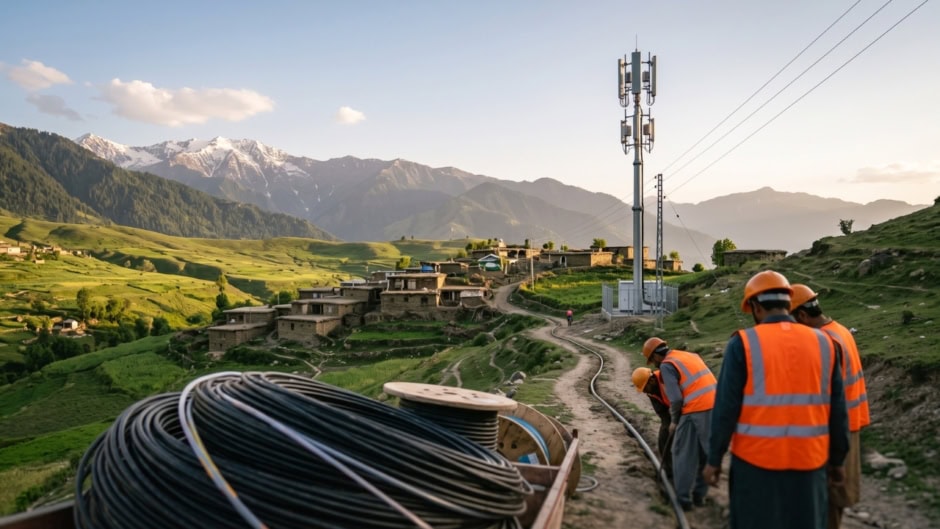
The federal government wants to bridge the digital divide. Federal Minister for Economic Affairs Ahad Cheema recently chaired a crucial meeting. He discussed the proposed National Connectivity Plan. Minister for IT & Telecom Shaza Fatima Khawaja and several senior officials also attended this session. Primarily, the meeting focused on expanding high-speed internet access. The government wants to connect villages, remote areas, and small towns. Consequently, this move will unlock massive new economic opportunities across the country.
A Connectivity Plan to Empower Freelancers & Digital Professionals
Currently, slow and unreliable internet creates major hurdles for remote workers. Therefore, Federal Minister Ahad Cheema highlighted the government’s top priority. Authorities aim to facilitate freelancers, e-commerce entrepreneurs, and other digital professionals living in remote regions. The government will take all necessary measures to ensure affordable, high-speed internet services. As a result, every citizen can fully participate in the growing digital economy.
Furthermore, the session highlighted the critical importance of 5G infrastructure. Next-generation fiber-to-the-home (FTTH) networks will also drive national economic growth. Ultimately, these crucial upgrades will create jobs and foster nationwide digital inclusion.
Ambitious Infrastructure Targets
Pakistan is already experiencing strong momentum in digital development. Officials noted steady growth in FTTH subscriptions, which currently stand at 2.8 million. Moreover, the country boasts a robust fiber footprint of 234,000 kilometers. The current infrastructure includes 5.1 million house passes and six operational submarine cables.
To build upon this solid foundation, the government outlined highly ambitious national targets. The plan seeks to expand the infrastructure to 10 million house passes. Additionally, the government aims to raise average fixed broadband download speeds to 85 Mbps. Authorities also plan to increase tower fiberization to 60 percent. Consequently, these specific efforts aim to secure the country a spot among the world’s top 50 countries for broadband performance.
Strategic Reforms & Tax Relief
The meeting placed a massive emphasis on digital affordability. Participants actively considered targeted tax relief for internet users living in remote areas. This key decision will significantly expand digital participation.
Additionally, officials discussed several strategic reforms. The government plans to abolish right-of-way fees. Authorities will also launch a single-window approval portal and introduce district-level licensing. Furthermore, the plan makes fixed broadband connectivity mandatory across all public institutions, schools, and health facilities.
To ensure swift execution, the government will finalize the National Connectivity Plan expeditiously through comprehensive stakeholder consultation. Cheema stressed the need for a highly structured and sequenced approach. The government will prioritize essential regulatory reforms and enforce clear operator obligations. Moreover, officials will link financial support directly to verified performance milestones. This strategy will accelerate nationwide fiber deployment. At the same time, it will successfully safeguard public resources and ensure long-term commercial viability.