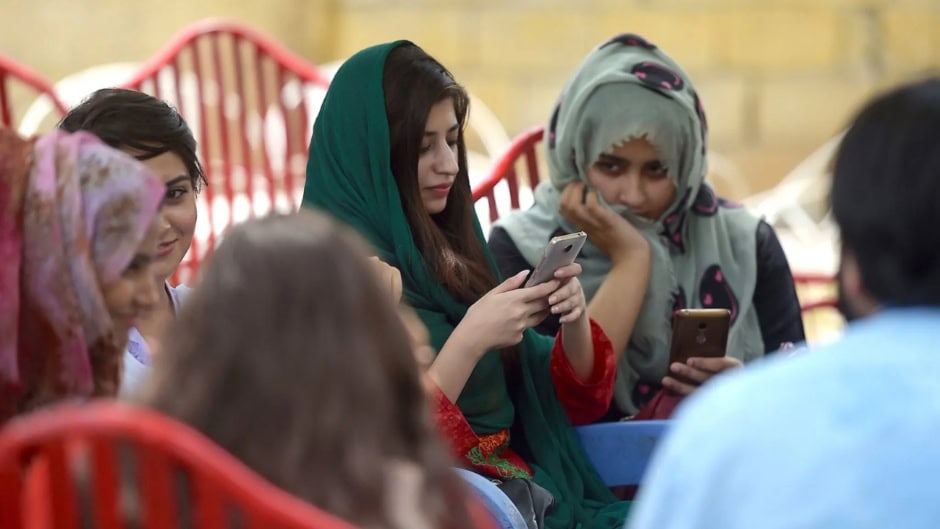
A Pakistani man has petitioned the Islamabad High Court (IHC) to direct the government to introduce a legislation to prevent children and teenagers under 16 from creating or operating social media accounts. The petitioner’s lawyer clarified that the petition cites risks of cyberbullying, sexual exploitation and exposure to harmful content for this move..
The petition comes at a moment when social media penetration has accelerated dramatically in Pakistan. DataReportal, a digital intelligence firm, estimated that the country had 117 million Internet users and 79.9 million active social media user identities, equivalent to 31.2% of the total population.
The demographic context makes the petition urgent. Children and young people represent a substantial share of the national demographic, which shows that over 11% of Pakistan’s population is aged 13 to 17, with a median national age of approximately 20.6 years. This means millions of teenagers currently use platforms designed without age-appropriate safeguards.
The legal framework proposed by the petitioners borrows from international precedent. The petition, filed by lawyers Jalal Haider, Yahya Farid Khwaja and Muhammad Zeshan Ali on behalf of Waqas Nasir, draws on Australia’s restrictions on social media use by under-16s as a precedent, seeking an age-verification mechanism for social media accounts of children and teenagers under 16.
According to Haider:
In Pakistan, if you look at TikTok, for instance, out of say one million users in Pakistan, half of them are children under 16. So regulating this is extremely important because a situation has emerged where children have become addicted to it.
The petition’s scope extends beyond individual platform responsibility. The petition invokes the legal principle of parens patriae, under which the state acts as a guardian to protect minors. This principle places the burden on government rather than exclusively on parents or platforms.
The proposed implementation mechanism relies on institutional coordination.
“PTA (Pakistan Telecommunications Authority) and NADRA (National Database and Registration Authority) should jointly build a similar mechanism to detect if a user is under 16, so that their account cannot be created or operated at all,” according to Haider.
This approach recognizes that age verification requires linking national identity databases with platform infrastructure.
The proposal includes enforcement mechanisms that hold multiple stakeholders accountable. The petition mentions “imposing penalties on parents if they allow children under 16 to use social media” alongside requirements that “social media apps should also be obligated to align their platforms with Pakistani laws.”
Australia’s approach provides a tested model, and in many ways, became pioneer in social media ban implementation. Australia enacted its Online Safety Amendment (Social Media Minimum Age) Act 2024, by setting a statutory age limit of 16. Pakistan’s petition specifically references this legislation as precedent for mandatory age restrictions rather than voluntary platform policies.
“We have made the Federal Government, the Federation of Pakistan, a party to this so that a federal law is enacted.” said Haider. “Once that law is passed, it will naturally be enforceable across Pakistan.”
Just a month ago, Punjab assembly took a similar initiative, signaling towards a more formal policy in the making sooner than expected at the federal level.
The case now awaits the Islamabad High Court’s initial response determining whether the petition merits consideration for full hearing.