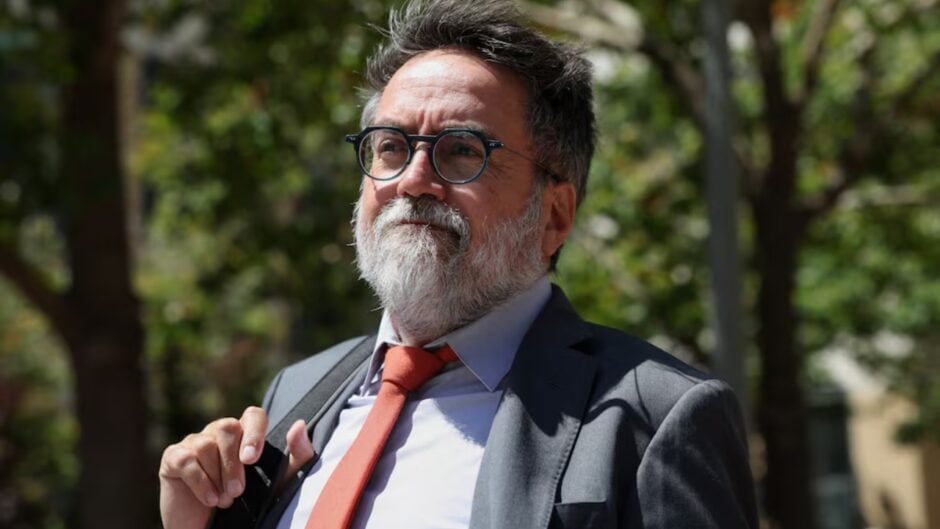
Arturo Bejar has become a major thorn in Meta’s shoes. Having spent six years working on cyberbullying as a Facebook safety engineer, he is intimately familiar with Meta’s internal environment. Which makes his testimony against Meta even more powerful.
Bejar’s testimony comes as a result of a direct access to top executives, where he sat in on high-level strategy sessions, and observed corporate priorities firsthand. Earlier this week, he took the stand in an Oakland federal courtroom to recount those observations to a jury.
According to his testimony, Meta suffered from a fractured culture where staff fixated entirely on engagement metrics while ignoring user safety. He argued that Mark Zuckerberg was uniquely positioned to rectify the situation, yet deliberately chose not to intervene.
This testimony anchors a major lawsuit filed collectively by 29 states, featuring plaintiffs such as California, Colorado, Kentucky, and New Jersey. The state attorneys general allege that Meta purposefully engineered Instagram and Facebook to foster youth addiction, fully aware of the dangers backed by their own internal data. Despite knowing the risks, the corporation rolled out features designed to maximize screen time while bypassing adequate safety guardrails.
Bejar referenced proprietary Meta research polling upwards of 200,000 individuals regarding harmful online experiences. The data painted an unambiguous picture: teens faced elevated frequencies of detrimental interactions across the board. Although the firm possessed this evidence and mapped out the crisis, meaningful corrective action was largely nonexistent.
Recalling the company’s famous motto, “Move fast and break things,” Bejar noted that protection was never part of that calculus. Efforts by various teams to implement safeguards routinely met internal pushback, whereas updates that drove up engagement were swiftly greenlit regardless of potential harm.
He also addressed tools like Take a Break and Quiet Mode, asserting they were purposefully weak solutions. According to him, these are intended strictly for public relations rather than genuinely assisting young users in managing their screen time.
Bejar’s crusade is deeply personal. After his daughter dealt with unwanted sexual approaches on Instagram, he realized his professional background building safety architectures couldn’t shield his own child. That failure initially drew him back as a consultant and continues to fuel his willingness to testify.
“I kept an eye on how distressing it was for her,” Bejar said. “She got a good following, at the price of harm.”
Refuting a 2021 statement by Zuckerberg asserting that the company never places profit above user wellbeing, Bejar bluntly told the court, “Based on my experience at Meta, that is not an accurate statement.”
“It’s so false, every part of it,” Bejar said. “You just cannot trust Mark Zuckerberg with kids.”
The current proceedings form part of a massive legal wave encompassing more than 3,100 federal lawsuits. While platforms like YouTube, TikTok, and Snapchat have chosen to settle numerous claims to avoid court, Meta is mounting a more aggressive defense. Bejar’s appearance deals a heavy blow to their case, coming from an insider who understands precisely how leadership formulated its policies.
The legal battle is projected to stretch across multiple weeks, with Zuckerberg himself anticipated to take the stand. Even so, Bejar has already established the core narrative.