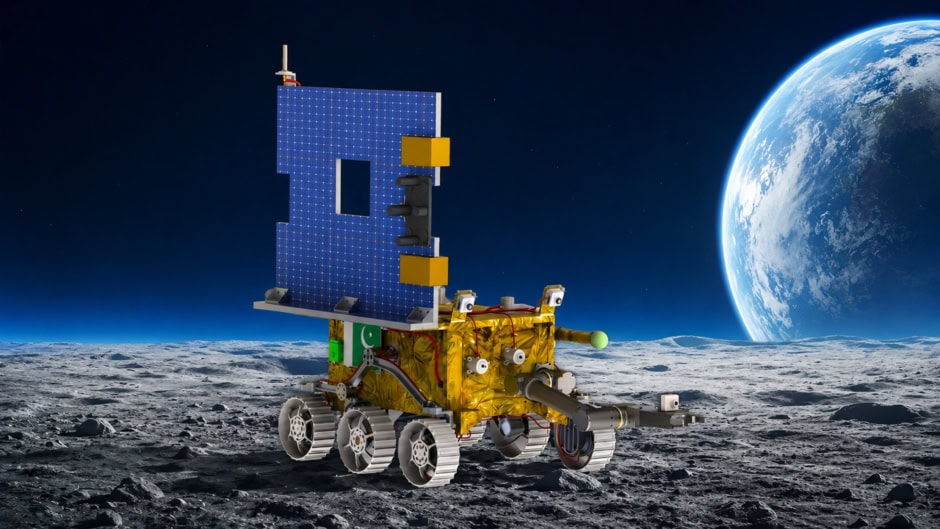
Pakistan’s first lunar rover, Jinnah-1, is expected to reach the Moon in 2028, according to SUPARCO Chairman Yusuf Khan. The mission would mark a major new phase for the country’s space program.
Speaking at an event for World Space Week, Khan said Pakistan has made significant progress in its space activities. He also highlighted the country’s growing use of its own satellites.
Pakistan previously relied on European and Chinese satellites for several space-based services. However, the country has launched multiple satellites as it works to expand its own space capabilities.
The E-1 satellite was launched in January 2025. Pakistan then sent two more satellites into space in July 2025 and October 2025. The country now has six Earth observation satellites serving different sectors. These satellites support agriculture, urban planning, and natural disaster management.
Satellite technology is also helping expand internet and television coverage across Pakistan. These services are becoming a larger part of the country’s wider space program.
Khan also pointed to World Space Week as a way to introduce young people to space technology. The event helps raise awareness about space science and its practical uses.
The Jinnah-1 mission will take Pakistan beyond its current focus on Earth observation and satellite services. If the 2028 mission succeeds, it will become an important milestone for the country’s space program.