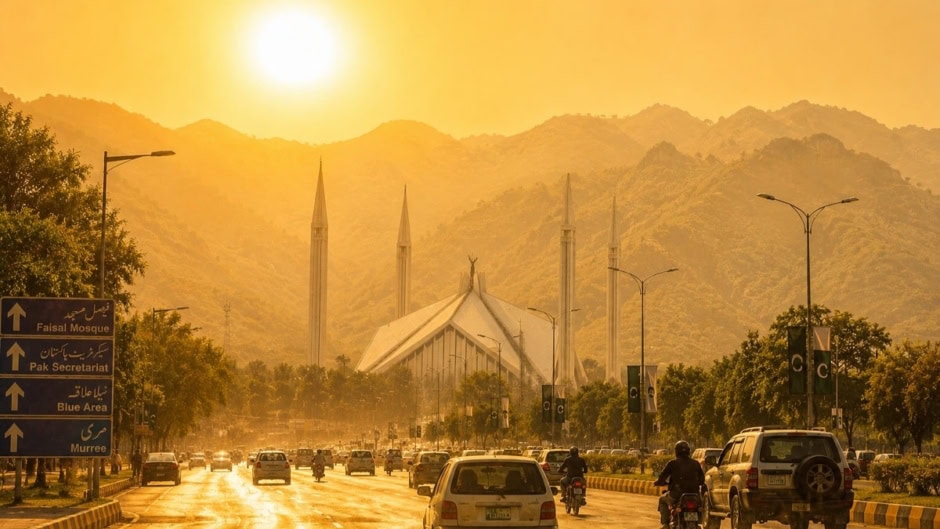
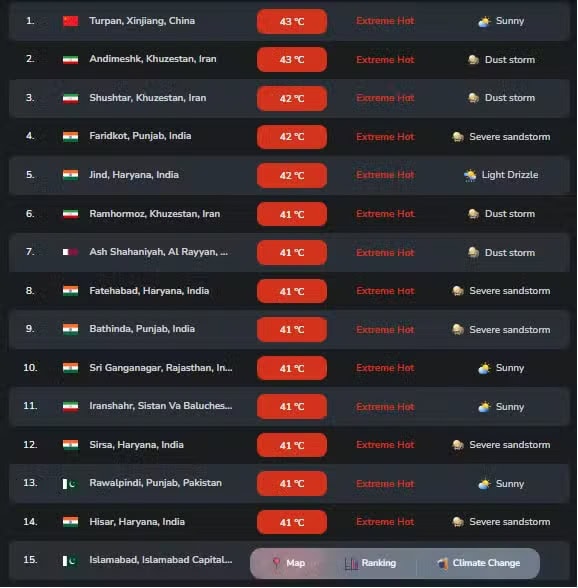
Rawalpindi and Islamabad have entered the list of the world’s 15 hottest cities as extreme temperatures continue across Pakistan. According to the latest global temperature ranking from the weather tracker, Rawalpindi ranked 13th with a temperature of 41°C. Meanwhile, Islamabad secured the 15th position as the federal capital continued to face intense summer heat.
The ranking comes as many parts of Pakistan remain under severe heat stress. Over the past few weeks, several districts in Punjab, Sindh, and southern regions have recorded dangerously high temperatures. As a result, authorities have repeatedly urged people to avoid direct sunlight during the hottest hours of the day and stay hydrated.
For Islamabad, however, the rising temperature reflects more than just seasonal weather. Environmental experts believe years of poor urban planning have made the situation worse. The Capital Development Authority (CDA) has faced repeated criticism for removing trees to build underpasses, flyovers, and other infrastructure projects. Critics argue that these developments have reduced the city’s green cover without giving enough attention to environmental protection.
Moreover, the steady removal of trees has increased the urban heat effect. Large concrete structures now absorb and retain more heat, making several parts of the capital much hotter during the summer months.
Conservation organizations, including WWF-Pakistan, have also raised concerns over large-scale tree cutting. They linked the loss of trees to land clearing for road expansion, infrastructure projects, and monument construction.
Environmental experts warn that the loss of thousands of mature trees has weakened Islamabad’s natural defense against rising temperatures. They also fear that reducing large green canopies is turning many areas of the capital into concrete heat traps, making already harsh summer conditions even more difficult for residents.